

Vishaal Consultancy Services

Home / blogs / Manpower Planning Guide

Manpower Planning Guide: Process, Strategic Workforce Planning and Business Importance

Introduction

When a business has too many employees in some roles but not enough skilled workers in others, costs can rise while work still suffers. An Indian state-owned manufacturing company faced this problem, with surplus positions and growing financial losses despite an expanding workforce. Its experience shows what can go wrong when staffing decisions don’t match actual business needs. 

Manpower planning helps employers avoid such gaps by assessing current staffing levels, identifying skill shortages, and estimating future workforce needs before they become urgent. 

In this blog, we’ll cover the planning process, its business benefits, and the labour compliance factors Indian employers should consider when making workforce decisions.

What Is Manpower Planning, and How Does the Manpower Planning Process Work?

Manpower planning is the process of assessing a company’s current workforce and estimating its future staffing and skill needs. It helps employers decide when to hire, train, transfer, or reskill employees so they can meet business goals within budget.

Effective workforce planning also considers upcoming projects, employee exits, changing workloads, and future skill requirements. This helps businesses prepare for change without disrupting daily operations.

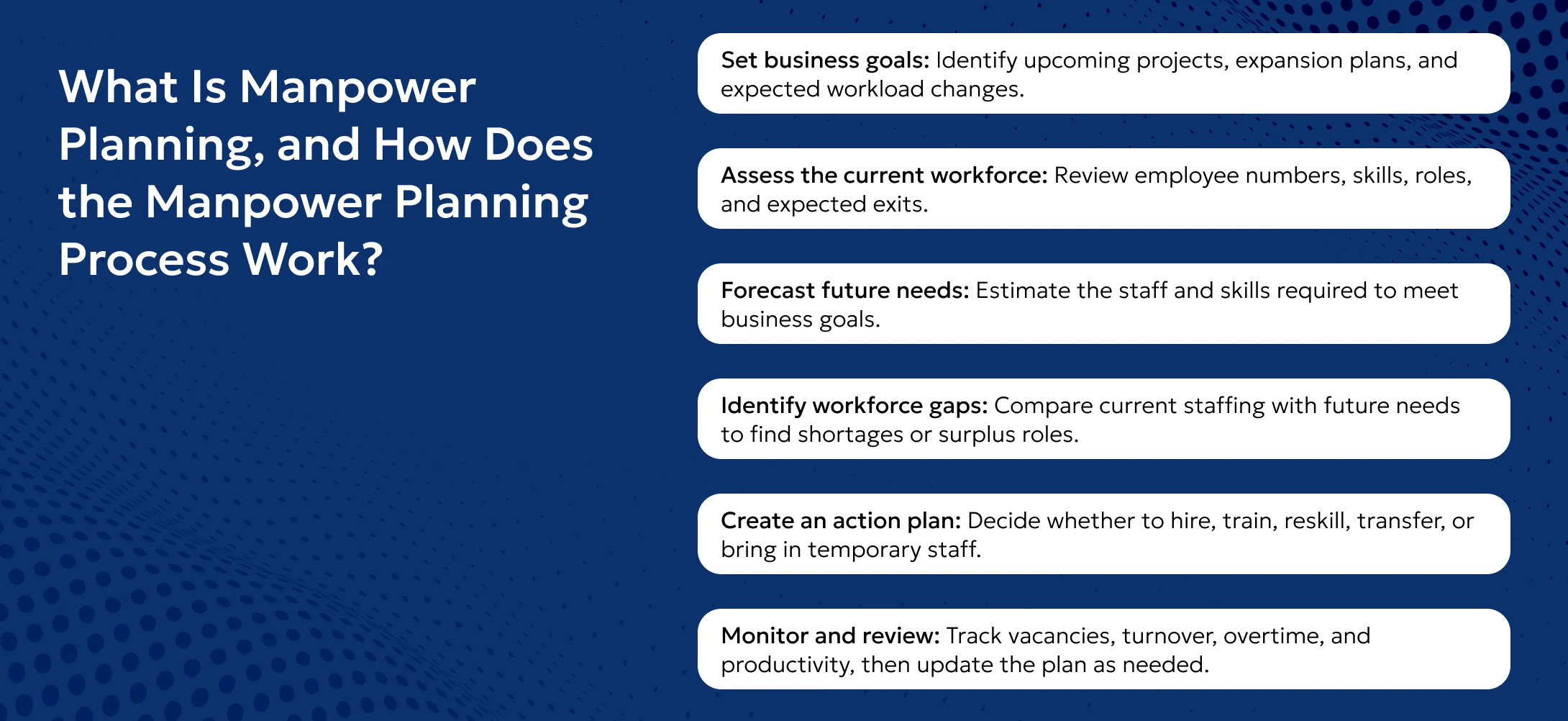
The manpower planning process involves 6 key steps:

  • Set business goals: Identify upcoming projects, expansion plans, and expected workload changes.
  • Assess the current workforce: Review employee numbers, skills, roles, and expected exits.
  • Forecast future needs: Estimate the staff and skills required to meet business goals.
  • Identify workforce gaps: Compare current staffing with future needs to find shortages or surplus roles.
  • Create an action plan: Decide whether to hire, train, reskill, transfer, or bring in temporary staff.
  • Monitor and review: Track vacancies, turnover, overtime, and productivity, then update the plan as needed.

Reviewing these steps regularly helps businesses keep staffing decisions aligned with changing goals and operational needs.
Importance of Manpower Planning for Businesses

Manpower planning helps businesses have enough employees with the right skills to handle daily work and meet future goals. It also helps employers manage costs, prepare for staff changes, and meet relevant employment requirements.

Key benefits include:

  • Cost control: Helps businesses estimate spending on salaries, hiring, training, and overtime before costs rise.
  • Higher productivity: Ensures employees have suitable roles and manageable workloads, helping them work more effectively.
  • Fewer skill gaps: Helps employers spot missing skills early and decide whether to train current employees or hire new ones.
  • Business continuity: Helps businesses prepare for resignations and retirements so essential work can continue without major delays.
  • Better workload management: Helps employers identify teams with too much work and adjust staffing before employees become overburdened.
  • Support for growth: Helps businesses plan staffing for new projects, locations, or increased demand.
  • Better compliance planning: Gives employers time to prepare required employment records, manage payroll obligations, and review working-hour and contractor requirements.

Regular reviews help businesses keep staffing plans in line with their goals, budgets, and changing workforce needs.

How Can You Implement Strategic Workforce Planning?

Strategic workforce planning connects your long-term business goals with the people and skills you’ll need to achieve them. It helps you prepare for changes in demand, technology, and business operations instead of making staffing decisions only when a vacancy arises.

Here are five steps to get started:

  • Define your business goals: Identify plans such as expanding into new markets, launching products, or increasing production. These goals will help you estimate future workforce needs.
  • Map future roles and skills: Work out which roles and skills will become essential as your business grows or changes. Consider whether existing roles may need new responsibilities.
  • Assess your current talent: Identify employees whose skills match your future needs and areas where additional training or new hires may be necessary.
  • Choose how to fill the gaps: Decide whether to train existing employees, recruit new talent, promote employees, or bring in specialist support. Compare the time, cost, and benefits of each option.
  • Review your plan as goals change: Revisit your workforce strategy when business priorities, technology, or customer demand shifts. This helps you adjust hiring and training plans before skill shortages affect operations.

Strategic workforce planning helps you build the skills and capacity your business will need in the future. It also helps you make better use of existing talent and prepare for growth without relying on last-minute hiring.

How Can You Improve Manpower Planning and Maintain Compliance?

When planning your workforce, you need to consider more than how many employees your business. Your hiring decisions, employment terms, payroll, and staff records must also meet the labour laws that apply to your business. 

Here are some practical steps you can take:

  • Update employee records: Maintain accurate details of your employees, their roles, attendance, wages, and other required documents.
  • Budget for staffing: Account for wages, overtime, leave, and applicable social security contributions when estimating your staffing expenses. 
  • Review employment terms: Make sure you understand the legal requirements for permanent, fixed-term, temporary, and contract workers. 
  • Clarify contractor duties: If you hire contract workers, understand your legal responsibilities as the principal employer and those of the contractor. 
  • Document staff changes: Keep the required records when you hire employees, transfer them, change their employment terms, or manage their exit. 
  • Track legal changes: Review your workforce policies when relevant legal requirements change or your business expands. 

The rules that apply to you depend on your establishment, location, and workforce. Reviewing these requirements regularly can help you identify compliance gaps early and address them before they become bigger problems.

Case Study

1. Background:

An Indian state-owned manufacturing company faced declining business performance and growing financial pressure by 2013.

2. Challenge:

The company had around 300 surplus positions due to poor manpower planning, ineffective HR policies and pressure to create jobs. Employees were assigned roles without systematic job analysis, while the company also faced shortages of skilled workers in critical areas.

3. Business Impact:

  • 300 surplus positions: Excess staffing increased operating costs.
  • US$1.46 million in accumulated losses: The company reported this amount by December 2013.
  • Workforce growth without effective planning: Employee numbers rose from 693 in 2010–11 to 1,130 by December 2013, while underlying operational problems remained.

Action Taken and Key Takeaway

In 2013, the company set up a seven-member crisis team and brought in a full-time consultant to review its financial and operational problems and plan a turnaround.

The case shows that hiring more people doesn’t always solve a business’s problems. Employers need to match staffing levels, employee skills, and job roles to actual business needs. Regularly reviewing workloads and forecasting future staffing needs can help control costs and ensure the right people are in the right roles.

How Vishaal Consultancy Services Can Help You

As your workforce changes, keeping up with labour laws and employment requirements can become challenging. Vishaal Consultancy Services helps businesses review their compliance practices, check employment records, and identify gaps that need attention. 

Through compliance health checks, compliance gap analysis, and labour law advisory services, Vishaal Consultancy Services helps you understand your obligations and take corrective action. Contact the team to review your business’s labour compliance needs. 

Build a leave policy that balances employee entitlements, business continuity and statutory compliance.

Leave Policy in India

Conclusion

Manpower planning helps you match staffing levels and skills with your business needs. It also helps you control costs, manage workloads, and prepare for growth. Reviewing your workforce regularly makes it easier to spot staffing gaps early and make better hiring decisions while keeping labour compliance in mind. 

Vishaal Consultancy Services can help you review your labour compliance practices, identify gaps, and address documentation issues. Get in touch to understand your compliance obligations and find the right support for your business. 

Make leave management easier for your HR team with policies designed around your business and workforce.

FAQs

When planning your workforce, consider business growth, seasonal demand, employee turnover, new technology, and changes in workload. These factors help you estimate future staffing needs and decide when to hire, train employees, or redistribute work across your team.
Manpower planning helps you meet current and upcoming staffing needs, while strategic workforce planning looks further ahead. It connects your future staffing and skill requirements with your long-term business goals, helping you prepare your team for upcoming changes.
Review your manpower plan at least once a year and whenever your business expands, takes on major projects, or experiences high employee turnover. Regular reviews will help you spot staffing gaps early and adjust your plans before they disrupt daily operations.

See Related Blogs

Contact Us
Scroll to Top