Vishaal Consultancy Services

Home / blogs / What is the Process of Staffing and Why is it Important for Employers?

What is the Process of Staffing and Why is it Important for Employers?

process of staffing

Introduction

Are you struggling to hire the right people while staying compliant with labour laws? Many employers face delays, make wrong hires, and leave roles open longer than expected. This affects productivity and puts extra pressure on their existing teams.

When employers don’t follow a clear hiring structure, they make inconsistent decisions and increase costs. They may also miss proper documentation, which can lead to compliance issues during audits or inspections.

This is where the process of staffing becomes important. In this blog, you’ll understand what is staffing, the key steps in staffing process, and how it helps employers build a stable and compliant workforce.

What is Staffing?

Staffing is the process of identifying workforce needs and hiring, placing, and developing employees so that business operations run smoothly. It covers the full employee lifecycle, not just hiring.

It starts with understanding how many employees are needed and what roles are required. It then continues with selecting the right candidates, training them for their roles, and managing their performance over time.

What is the Process of Staffing?

The process of staffing is the structured way employers carry out these activities step by step. It helps ensure that hiring and employee management are done in a clear and consistent manner.

It focuses on placing the right person in the right role at the right time while reducing errors in hiring decisions. A defined process also makes it easier to manage employees as the business grows.

It typically includes:

  • Planning workforce requirements
  • Hiring and selecting candidates
  • Training and developing employees
  • Evaluating performance and managing growth
A clear process of staffing helps businesses stay organised, improve efficiency, and maintain compliance with labour laws.

Step-by-Step Staffing Process for Employers

A clear process of staffing helps you manage hiring and employee decisions in a structured way. Here are the key steps in staffing process:

1. Manpower Planning

When you carry out manpower planning, you first understand how many employees your business actually needs. You review your current team, identify gaps, and decide what skills are required for future work. This helps you avoid hiring in a rush and keeps your workforce aligned with business goals.

2. Recruitment

When you focus on recruitment, you attract candidates who match your role requirements. You choose the right channels like job portals, referrals, or agencies and create clear job descriptions so candidates know what to expect. This improves the quality of applications and reduces time spent on irrelevant profiles.

3. Selection

When you follow a proper selection process, you carefully evaluate candidates before making a decision. You shortlist based on skills, conduct interviews, and verify details like experience and background. This step helps you choose someone who fits both the role and your organisation, reducing the chances of hiring mistakes.

4. Placement and Onboarding

When you place employees in the right role and onboard them properly, you set clear expectations from the start. You assign responsibilities based on their skills and explain company policies, processes, and work culture. This helps new employees adjust quickly and reduces confusion in the initial days.

5. Training and Development

When you invest in training, you help employees perform their roles with confidence. You provide guidance on tasks, tools, and company processes so they understand how work is done. Over time, continuous training also helps them improve their skills and contribute better to the business.
process of staffing

6. Performance Evaluation

When you evaluate performance regularly, you understand how well employees are meeting expectations. You set clear goals, review their work, and provide feedback to guide improvement. This keeps employees focused and helps you maintain consistent work quality.

7. Career Growth and Retention

When you focus on employee growth, you create opportunities for them to move forward in their careers. You offer promotions, role changes, or additional responsibilities to keep them engaged. This reduces employee turnover and helps you build a more stable team.

8. Compensation and Benefits Management

When you manage compensation properly, you ensure employees are paid fairly and on time. You also provide statutory benefits as required by labour laws and maintain proper payroll records. This builds trust, avoids disputes, and keeps your business compliant.

When you follow these staffing process steps, you create a clear and organised system for managing your workforce. This helps you make better hiring decisions, improve employee performance, and keep your business running smoothly.

Why is the Staffing Process is Important for Employers

A structured process of staffing helps you manage hiring and employee decisions in a clear and consistent way.

Here’s why it’s important for employers:

  • Helps Maintain Compliance: When you follow a proper staffing process, you keep all employee records, contracts, and policies in place. This helps you meet labour law requirements and stay prepared for audits without last-minute issues.
  • Improves Workforce Efficiency: When you hire the right people and place them in suitable roles, work becomes smoother and more accurate. Employees understand their responsibilities clearly, which improves overall performance.
  • Reduces Hiring Costs: A clear process helps you avoid wrong hires and frequent replacements. This reduces the time and money spent on rehiring and training new employees again.
  • Supports Business Growth: As your business grows, you need to hire in a planned way. A structured staffing process helps you scale your team without delays or confusion.
  • Strengthens Organisational Structure: When roles and responsibilities are clearly defined, teams work better together. This improves coordination and reduces errors in daily operations.
A well-defined process of staffing helps you build a stable, efficient, and compliant workforce.

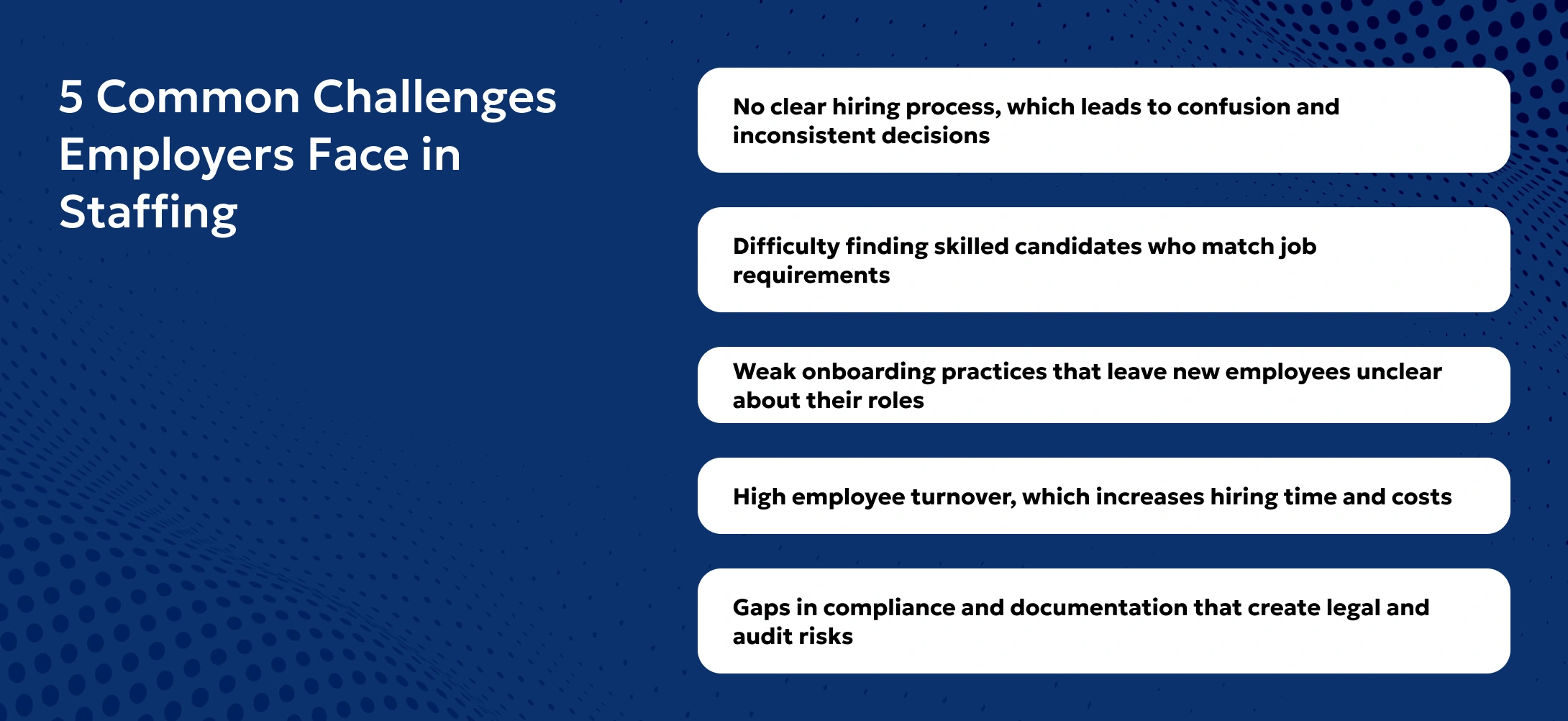
5 Common Challenges Employers Face in Staffing

Even with the best intentions, employers often face challenges while managing staffing. These issues can slow down hiring, affect productivity, and create compliance risks.

Some common challenges include:

  • No clear hiring process, which leads to confusion and inconsistent decisions
  • Difficulty finding skilled candidates who match job requirements
  • Weak onboarding practices that leave new employees unclear about their roles
  • High employee turnover, which increases hiring time and costs
  • Gaps in compliance and documentation that create legal and audit risks
These problems usually arise when there is no structured system in place. Once the process of staffing is clearly defined and followed, most of these challenges become easier to manage.
process of staffing

Best Practices to Improve the Staffing Process

Improving the process of staffing doesn’t always require major changes. Small, consistent improvements can make hiring and employee management much more effective.

Here are some practical best practices:

  • Define job roles clearly before hiring, so candidates and recruiters understand expectations from the start
  • Standardise recruitment and selection steps to ensure consistency and reduce hiring errors
  • Maintain proper employee records to support compliance and avoid documentation gaps
  • Invest in basic training programs to help employees perform better and adapt faster
  • Review workforce needs regularly so hiring always matches business demand
Many businesses try to manage staffing internally but still face gaps in structure or compliance. In such cases, expert guidance can help streamline the process of staffing and reduce long-term risks.
process of staffing

How Vishaal Consultancy Services Can Help Employers

Managing the process of staffing along with compliance can be challenging for growing businesses. We at Vishaal Consultancy Services help employers align staffing activities with labour laws and ensure proper documentation and record management across all HR processes.

Our experts provide guidance on statutory requirements, maintain employee records, assist during audits and inspections, and reduce compliance risks so employers can focus on running and growing their business.

Conclusion

A well-defined process of staffing gives businesses clarity in how they hire and manage people. It connects planning, recruitment, training, and retention into one structured flow, making daily operations more organised and predictable. When each step is followed properly, employers build a more stable and reliable workforce over time.

If your business is struggling with staffing or compliance gaps, it may be time to review your current approach. We at Vishaal Consultancy Services help you streamline your process of staffing, reduce risks, and stay compliant with ease. Getting the right support, contact us today!

FAQs

Staffing isn’t just about filling vacancies. It covers the full employee journey, including planning workforce needs, selecting the right candidates, training them, and managing performance. Whereas hiring is only one part of this structured process.
A structured staffing process helps employers avoid rushed decisions and wrong hires. It improves workforce planning, reduces turnover, and supports better compliance with labour laws during audits and inspections.
We at Vishaal Consultancy Services help employers streamline their staffing process by ensuring proper documentation, labour law compliance, and accurate employee records. Our experts also support audits and inspections so businesses can focus on operations with ease.

See Related Blogs

Scroll to Top

Get a Free Consultation

Note: Our services are currently offered exclusively to businesses and not to individuals. Enquiries from individuals will not be addressed.