

Table of Content
Paying ESI contributions might seem like a routine monthly task, but things don’t always go as planned. You may calculate the contributions correctly, generate the challan and make the payment, only to find that the ESIC portal hasn’t updated the status. In other cases, you might run into errors while generating the challan or completing the transaction.
For HR and payroll teams, these issues can be frustrating, especially when the payment deadline is near. But knowing what to check and how to fix common payment problems can save time, prevent unnecessary follow-ups and help you keep your ESI records in order.
An ESI challan is a payment document generated on the ESIC portal. Employers use it to deposit monthly ESI contributions for eligible employees.
The payment is due within 15 days of the end of each calendar month. For example, the April contribution must be paid by 15 May.
The contribution rates are:
| Contribution | Rate |
|---|---|
| Employer’s share | 3.25% |
| Employee’s share | 0.75% |
| Total | 4% |
The employer must deposit both shares with ESIC within the due date.
Legal update: The Code on Social Security, 2020 came into force on 21 November 2025 and subsumed the ESI Act, 1948. Existing ESI Regulations, 1950 were saved until 20 November 2026, subject to applicable provisions. The ESI General Regulations, 2026 published in July were drafts, not final regulations.
If the same ESIC portal error keeps appearing, get help identifying the issue and completing your challan payment.
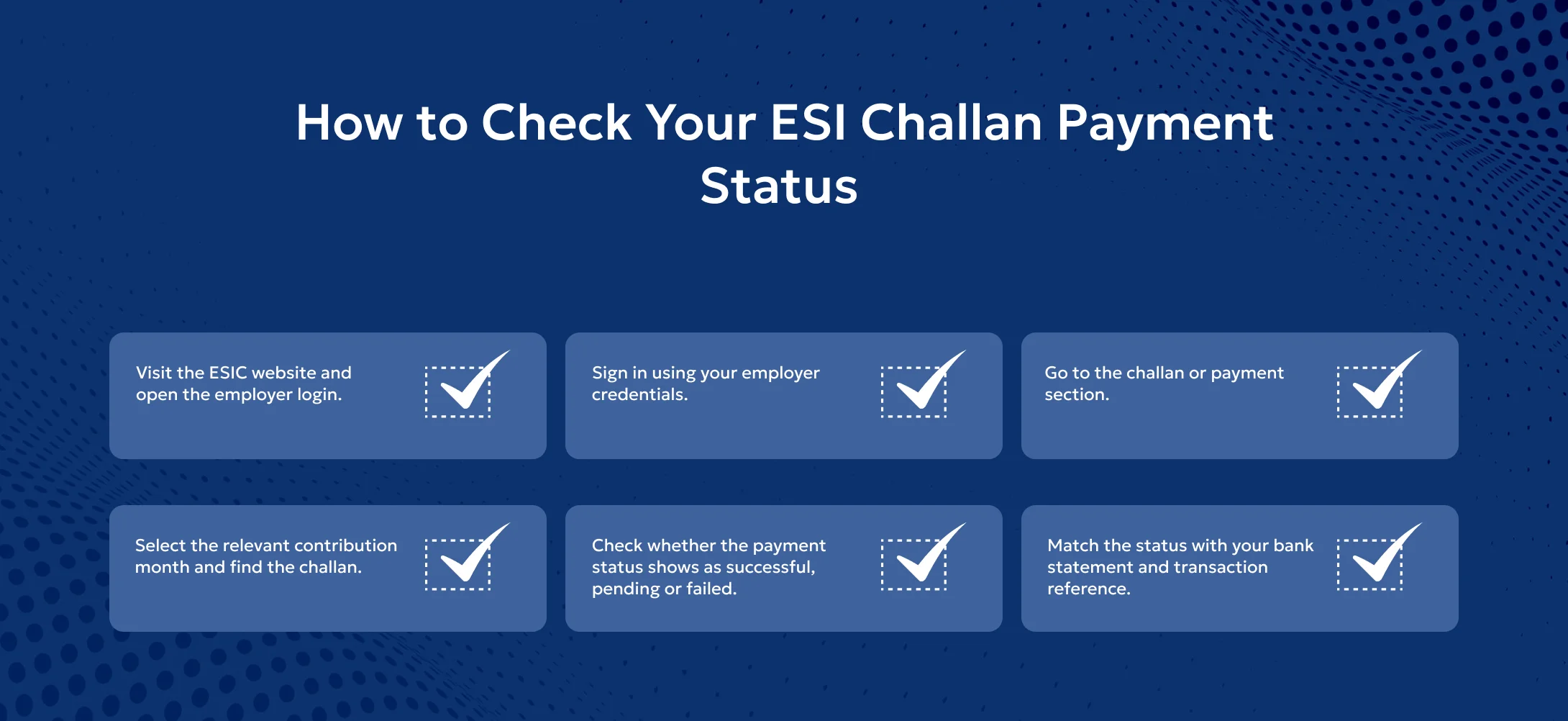
You can check your ESI challan payment status through the ESIC employer portal:
Keep your challan number, bank transaction ID and payment receipt handy. If your bank account has been debited but the portal still shows the challan as unpaid, verify the transaction before attempting another payment. This will help you avoid an unnecessary duplicate payment.
Unsure whether to retry a failed ESI payment? Get help reviewing the transaction status before making another payment.
If you handle payroll or ESI compliance, a payment error can quickly turn into an extra task for your team. You might see a bank debit without an ESIC confirmation, struggle to generate a challan or find that the amount doesn’t match your payroll records.
Here’s how to identify these issues and what your HR or accounts team should do next.
| Payment problem | Why it happens | What your team should do |
|---|---|---|
| Bank account debited, but payment failed | The bank may have debited the amount, but a network interruption or payment gateway timeout prevented confirmation from reaching ESIC. | Check your bank statement and note the transaction reference number. Recheck the challan status before taking further action. If the payment remains unresolved, contact your bank and raise a query with ESIC. Don’t pay again until you’ve confirmed whether the first transaction failed. |
| Payment successful, but not updated on the ESIC portal | The bank has processed the transaction, but ESIC’s records haven’t been updated yet. | Save the bank debit confirmation and payment receipt. Check the portal again and contact ESIC with your challan number and transaction reference if the status remains unchanged. Keep the proof of payment for your compliance records. |
| Unable to generate an ESI challan | Incomplete employee records, incorrect wage details or technical issues with the portal can prevent challan generation. | Review employee details, ESI wages and contribution records for the month. Correct any discrepancies and try again. If the error continues, save a screenshot and contact ESIC support rather than delaying the issue until the payment deadline. |
| Incorrect challan amount | Payroll calculations may contain errors, employee records may be missing or the applicable ESI wages may have been entered incorrectly. | Reconcile the challan amount with your payroll register. Check the eligible wages and applicable employer and employee contribution rates. Correct the records and regenerate the challan where permitted. If you’ve already paid, contact ESIC for guidance before making another payment or requesting an adjustment. |
| Payment gateway or net banking error | Bank server downtime, an interrupted internet connection or a gateway failure can stop the transaction midway. | Check whether your bank’s net banking service is working before retrying. Use another payment option available on the ESIC portal if necessary. If your account has already been debited, verify the first transaction before initiating another payment. |
| Expired or invalid challan | The challan may no longer be accepted for payment, or its status may have changed. | Check the challan status and payment instructions on the ESIC portal. If you need to generate a fresh challan, follow the prescribed process. Verify the contribution month and payable amount before completing the transaction. |
| Duplicate payment or double debit | Your team may retry a transaction after seeing a failed or pending status, even though the first payment has gone through. | Compare the transaction reference numbers and save both payment receipts. Report the duplicate debit to your bank and ESIC with the supporting documents. Don’t assume the extra amount will automatically be adjusted against the next contribution. |
Late ESI payments can lead to additional costs for your business.
The 12% interest rate was notified in May 2026, effective from 21 November 2025. Check the applicable regulations before calculating damages, as older penalty rates may not apply.

As an employer, you can avoid many ESI payment issues by making a few checks part of your monthly payroll routine:
If managing ESI compliance is taking up your team’s time, Vishaal Consultancy Services can help streamline payroll and compliance processes, keep payments on schedule and maintain accurate records for you.
If the payment went through but you can’t find the receipt, get help tracing the transaction and locating your ESI challan receipt.
A missed payment, incorrect challan or unresolved bank transaction can put your ESI compliance at risk and add more work for your payroll team. Vishaal Consultancy Services helps you manage ESI contributions, payroll processing and statutory records. We can help you check contribution details, track payment deadlines and address discrepancies before they turn into bigger compliance issues.
Since 2001, we’ve advised over 250 employers on labour law and statutory compliance. With our support, you get to spend less time dealing with payment errors and focus more on running your business. For local support, explore our ESI compliance services in Bangalore.

ESI payment errors can disrupt your payroll schedule and create unnecessary compliance work. A regular review of contribution details, payment confirmations and supporting records can help your team catch issues early and avoid delays in meeting statutory obligations.
If managing these tasks is taking time away from your core operations, Vishaal Consultancy Services can help. We provide ESI compliance and payroll support to simplify your statutory responsibilities and help your business stay on track. Contact us to discuss your requirements.
Need ongoing help with ESI contributions, challan payments and monthly compliance? Speak with Vishaal Consultancy.
See Related Blogs
BLOGS
BLOGS
BLOGS
Fill in your details to download our New Labour Code PDF.
Fill in your details to download our exclusive e-learning document.
Fill in your details to download our exclusive e-learning document.
Fill in your details to download our exclusive e-learning document.