Vishaal Consultancy Services

Home / blogs / Statutory Compliance Checklist 2026 for Employers in India

Statutory Compliance Checklist 2026 for Employers in India

Statutory Compliance Checklist 2026 (2)

Introduction

Missing a compliance deadline in 2026 without even realising it? It happens more often than you think. With multiple filings, changing rules, and everyday business demands, things can slip before you notice.

What most employers struggle with isn’t effort, it’s clarity. When compliance isn’t structured, it becomes difficult to track and easy to miss. But when you break it down into clear steps, it starts to feel manageable. A simple checklist can help you stay on track and handle compliance with more control.

In this blog, you’ll find a clear statutory compliance checklist for 2026, broken down into practical steps, so you know exactly what to do and when to do it.

What is Statutory Compliance?

Statutory compliance means following the legal rules set by the government to run your business. It includes paying employee benefits, maintaining proper records, and filing required returns on time.

For employers in India, it is a mandatory responsibility, regardless of the size of the workforce.

Why Employers Need a Structured Approach to Compliance in 2026

Before getting into checklists and timelines, it helps to clearly understand what statutory compliance actually means for an employer. It forms the base of everything that follows.

  • It means following the legal rules set by the government for running a business.
  • It includes paying salaries, benefits, and statutory contributions correctly.
  • It involves maintaining proper registers and required documents.
  • It requires timely filing of returns and payments within deadlines.
  • It is mandatory for employers, depending on applicable laws and workforce size.

Statutory Compliance Checklist for Employers in 2026

Compliance becomes easier when you plan it around timelines, because handling everything together often leads to confusion and missed deadlines. When each task has a clear schedule, you can track it better and stay consistent without last-minute pressure.

Breaking it into monthly, periodic, and event-based actions helps you manage compliance in a more practical way.

1. Monthly Compliance Tasks

  • EPF and ESI Contributions
    As an employer, you need to calculate and deposit PF and ESI contributions every month, and since these involve both employer and employee shares, delays can lead to interest and penalties.
  • TDS and Professional Tax Payments
    You are required to deduct TDS from salaries and deposit it within the due date, and where applicable, Professional Tax must also be handled correctly as per state rules.
  • Salary Processing and Payslips
    Salaries should be processed based on accurate attendance and deductions, and sharing payslips helps you maintain transparency with employees.
  • Attendance and Wage Records
    You must keep attendance and wage registers updated, because these are basic records that are often checked during inspections.
When your monthly tasks are handled properly, it becomes much easier to stay on top of overall compliance.
Statutory Compliance Checklist 2026 (2)

2. Quarterly and Periodic Compliance Tasks

  • TDS Return Filing and Payroll Review
    You need to file TDS returns every quarter with accurate details, and reviewing payroll at the same time helps you catch errors early before they grow into bigger issues.
  • Employee Records and Register Check
    It is important to review employee data and statutory registers regularly, because outdated or incomplete records can create problems during audits or inspections.
  • Labour Welfare Fund and Internal Review
    If applicable, LWF contributions should be made as per schedule, and a basic internal compliance check helps you understand if anything is missing or needs correction.
These periodic checks give you a chance to pause, review, and fix gaps before they turn into compliance risks.

3. Annual and Event-Based Compliance Tasks

  • Annual Returns, Bonus, and Gratuity Review
    You must file annual returns under labour laws, and if applicable, bonus payments and gratuity liabilities should be reviewed and handled properly to stay compliant.
  • License Renewal and Record Updates
    Shops and Establishment licenses need to be renewed as per state requirements, and employee records and agreements should be updated when needed.
  • Onboarding and Exit Compliance
    When employees join or leave, proper documentation and full and final settlements must be completed, because these steps directly impact compliance.
  • Inspections and Contractor Compliance
    You should be prepared with documents during inspections, and if you work with contractors, their compliance also needs your attention to avoid risks.
These tasks may not happen every day, but they are equally important, and many compliance issues usually start when these things are overlooked.

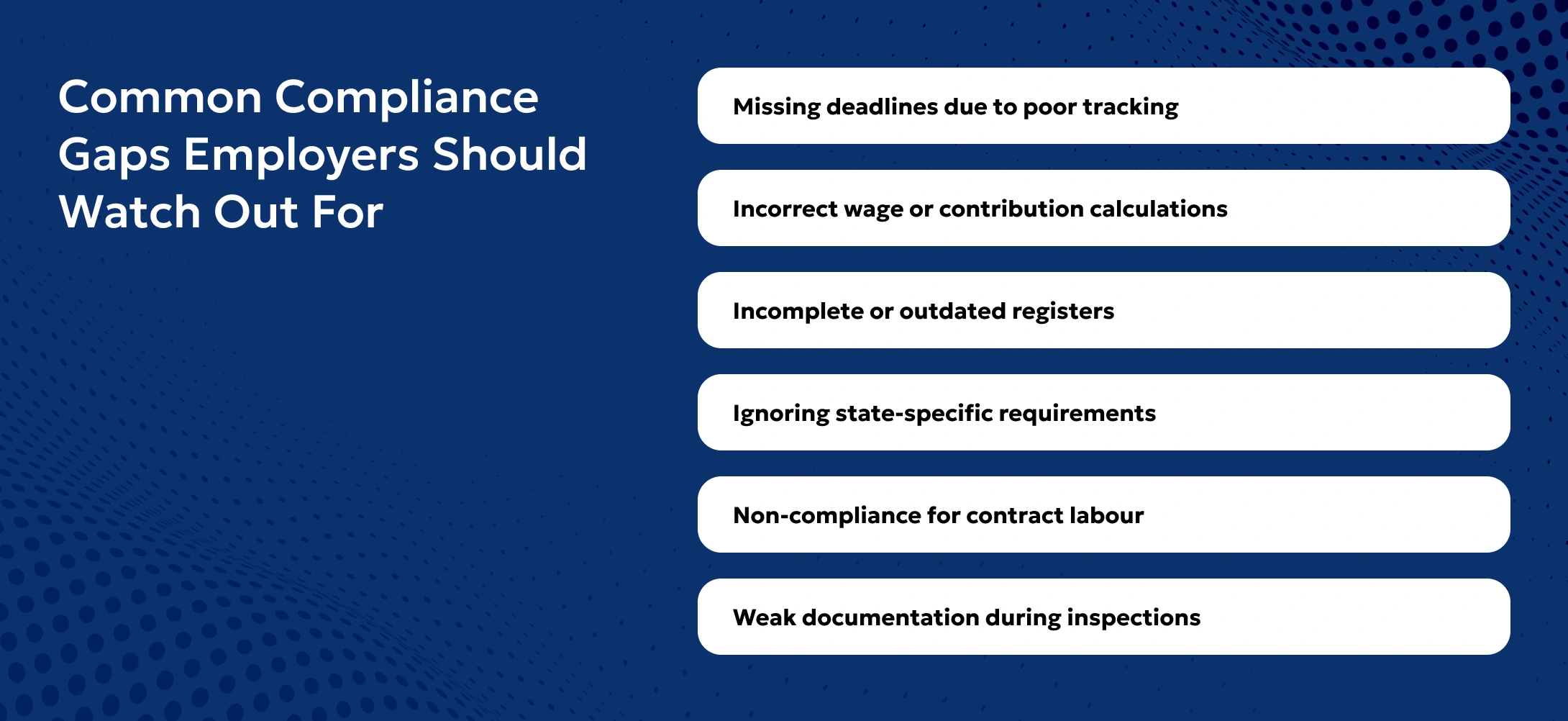
Common Compliance Gaps Employers Should Watch Out For

Even when everything seems under control, small gaps can still slip in. And these are usually the ones that cause trouble later.
  • Missing deadlines due to poor tracking
  • Incorrect wage or contribution calculations
  • Incomplete or outdated registers
  • Ignoring state-specific requirements
  • Non-compliance for contract labour
  • Weak documentation during inspections
These may feel like small issues at first. But over time, they can lead to penalties or unwanted attention from authorities. So, it always helps to catch and fix them early.
statutory compliance checklist

How to Keep Your Statutory Compliance on Track

Small gaps in tracking or documentation can lead to delays and penalties. Having a few clear systems in place helps you stay consistent and avoid last-minute issues.
  • Maintain a compliance calendar with all due dates
  • Use payroll or HR tools to track filings and payments
  • Conduct regular internal checks to identify gaps
  • Keep all records organised and audit-ready
  • Take expert support when required
If you are unsure about any requirement or deadline, consult a compliance expert to avoid errors and penalties.

Quick Statutory Compliance Checklist

Sometimes you just need a quick view to stay on track. Here’s a simple list you can refer to:
  • Monthly: EPF, ESI, TDS, Professional Tax, payroll records
  • Quarterly: TDS returns, compliance checks
  • Half-Yearly: Labour Welfare Fund, documentation review
  • Annual: Returns, bonus, license renewals
  • Event-Based: Employee joining, exit, inspections
You can use this as a base and build your own detailed checklist around it.

How Vishaal Consultancy Services Helps

At Vishaal Consultancy Services, we help employers stay compliant without the usual confusion. We track deadlines, manage filings, and keep your records in order, so you don’t miss anything important or face avoidable penalties.

We work closely with you to identify gaps, fix issues early, and keep your compliance on track. You focus on your business, and we make sure everything behind the scenes runs smoothly.

statutory compliance checklist

Conclusion

Statutory compliance is always running in the background of your business. You may not notice it every day, but it quietly affects how smoothly things work. When your processes are clear, deadlines get met without stress, records stay updated, and there are fewer surprises during inspections. It just makes your day-to-day work feel more under control.

If handling all of this feels like too much, getting the right support can really help. Vishaal Consultancy Services works with employers to simplify compliance, manage documentation, and keep everything on track. Contact us, today!

FAQs

It depends on factors like your employee count, type of business, and state laws. A one-time review of your setup helps you clearly identify which laws apply, so you can focus only on what is required and avoid missing key obligations.

The simplest way is to maintain a clear compliance calendar with all due dates. You can also use payroll or HR tools, but keeping everything organised in one place ensures you don’t miss important filings or payments.

You should consider expert help when compliance starts taking too much time, or when you’re unsure about rules and deadlines. Getting support early helps you avoid errors, stay consistent, and handle compliance with more confidence.

See Related Blogs

Scroll to Top