
Vishaal Consultancy Services

Home / blogs / Labor Law and Employment Law in India

Labor Law and Employment Law in India: Key Differences You Should Understand

Labor Law and Employment Law in India

Introduction

Have you ever wondered what really happens when an employer overlooks even a single labour rule?

A few years ago, a leading automobile company found out the hard way. What began as a dispute over working conditions and union rights soon spiralled into violence, forcing operations to shut down and inviting serious legal trouble. The real problem wasn’t just employee unrest but the company’s lack of clarity on which laws governed their workforce and how to comply with them.

For employers and HR professionals, this case is a timely reminder that labor law and employment law in India are not the same. Each serves a different purpose, and knowing the difference can help prevent costly mistakes.

Let’s understand what labour law in India actually means and why it holds such importance for every organisation.

What is Labour Law in India and Why It Matters

What is Labour Law in India

Labour law in India refers to the set of laws that govern the relationship between employers, employees, and trade unions. It mainly deals with collective rights, such as wages, working conditions, industrial disputes, and social security.
Key laws include:
  • The Factories Act, 1948
  • The Industrial Disputes Act, 1947
  • The Minimum Wages Act, 1948
These laws aim to balance the interests of both employers and employees, ensuring industrial peace and fairness at the workplace.
Labor Law and Employment Law in India

Why It Matters

The importance of labour law can be understood through its benefits to both sides:
  • Protects workers’ rights: Ensures fair wages, safe working conditions, and non-exploitative practices.
  • Promotes industrial harmony: Helps prevent strikes and disputes through structured negotiation.
  • Supports social security: Provides benefits like provident fund, gratuity, and compensation for injuries.
  • Ensures compliance: Keeps businesses aligned with national labour standards and avoids legal penalties.
When companies follow labour laws properly, they build trust with their workforce and maintain long-term stability.
Don’t wait for a dispute to check compliance

What is Employment Law and Its Role in Modern Workplaces

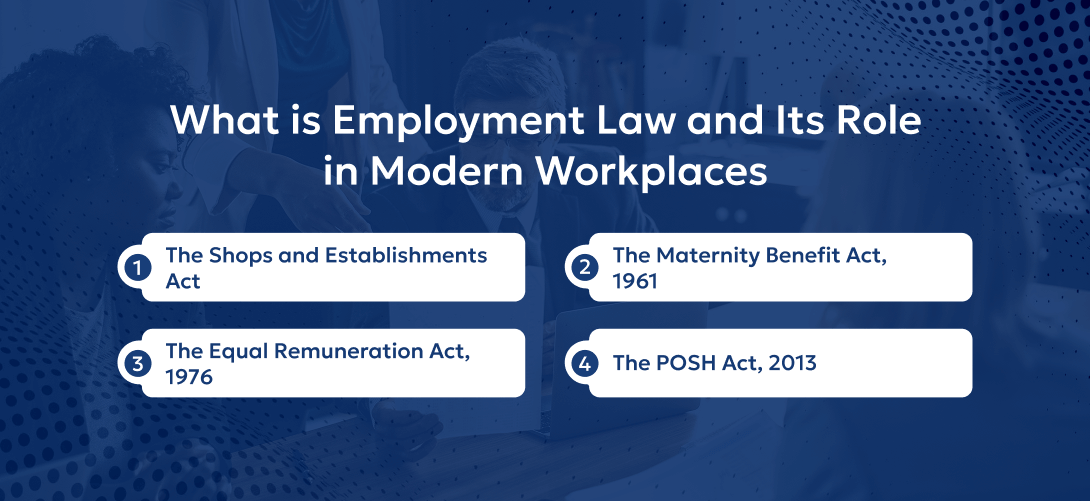
What is Employment Law

Employment law governs the individual relationship between an employer and an employee. It focuses on personal rights, workplace behaviour, and the legal aspects of hiring, managing, and terminating employees.
Some major Acts include:
  • The Shops and Establishments Act
  • The Maternity Benefit Act, 1961
  • The Equal Remuneration Act, 1976
  • The POSH Act, 2013
Employment law makes sure that every person working in a company is treated fairly, given equal opportunities, and provided with a safe working environment.

Role in Modern Workplaces

The importance of employment law has grown as work culture in India becomes more people centric. Its role includes:
  • Promoting equality: It ensures equal pay and non-discrimination.
  • Protecting individuals: It guards employees from unfair dismissal or harassment.
  • Supporting HR compliance: It helps HR teams create legally sound contracts and policies.
  • Encouraging ethical practices: It helps build a respectful, transparent, and lawful workplace.
  • Preventing disputes: Reduces chances of individual conflicts turning into legal cases.

A strong understanding of employment law helps organisations maintain professionalism and trust.
Labor Law and Employment Law in India
Are you sure your workplace policies are aligned with employment law?

Labour Law vs Employment Law: The Key Difference

Although they sound similar, labour law and employment law have different purposes. Here’s how they differ in practice.
Basis  Labour Law  Employment Law 
Focus  Collective rights of workers and unions  Individual rights between employer and employee 
Applicability  Industrial and manufacturing sectors  Corporate and service-based sectors 
Examples  Industrial Disputes Act, Factories Act  Shops & Establishments Act, POSH Act 
Dispute Mechanism  Labour Courts and Industrial Tribunals  Civil Courts or Arbitration 
Objective  Prevent exploitation and promote industrial peace  Ensure lawful, fair, and ethical workplace practices 
The difference between labour and employment law lies mainly in scope. Labour law deals with workers as a group, while employment law focuses on individuals. Together, they ensure both collective welfare and personal rights are protected.
Labor Law and Employment Law in India

Duties of Employers Under Labour Law

Every employer in India has legal obligations under labour law. These responsibilities are designed to ensure fairness, safety, and compliance at the workplace.
Some key duties of employers in labour law include:
  • Paying wages as per statutory norms.
  • Ensuring health and safety measures are followed.
  • Maintaining attendance, wage, and leave records.
  • Avoiding unfair labour practices and discrimination.
  • Providing statutory benefits such as PF, ESI, and gratuity.

Even small lapses, like missing registers or delayed filings, can lead to penalties. Regular internal audits help identify such gaps before authorities do.

When you comply with these laws, you not only stay safe from legal risks but also build stronger employee relationships.

Employment Law Obligations for Employers

Employment law obligations cover everything related to managing individual employees. They apply to all businesses, from startups to large corporations.
Here’s what every employer must follow:
  • Draft clear employment contracts outlining job roles, salaries, notice periods, and benefits.
  • Ensure POSH compliance by having an Internal Committee and regular training.
  • Provide equal pay for equal work regardless of gender or background.
  • Follow a fair termination process with notice and proper documentation.
  • Maintain confidentiality and data protection for employee information.
By following these laws, employers create workplaces that are transparent, inclusive, and legally sound.

Why Understanding Both Matters for HR Compliance

Knowing both labour law and employment law helps HR teams make smarter decisions. It’s not only to avoid penalties but to build a compliant and trusted organisation.
When your policies cover both areas, you:
  • Prevent disputes and employee grievances.
  • Build employee trust and retention.
  • Strengthen your organisation’s legal standing.
  • Promote ethical and people-first business practices.
As India’s workforce continues to evolve with new-age employment models and gig work, businesses that understand both areas will always stay one step ahead.

Case Study

Here’s a real case that shows what happens when an employer doesn’t follow labour laws and fair practices.

Incident:

One of the country’s leading automobile manufacturers faced serious legal trouble at its Manesar plant in Haryana. The issue began when the management refused to register a new workers’ union formed by employees. Tensions grew after the company suspended and terminated several workers without following due legal process. What started as a labour dispute soon turned into one of India’s most talked-about industrial conflicts, leading to strikes, violence, and the death of an HR manager in 2012.

Violations:

The company was found to have violated several key provisions of Indian labour and employment laws, including:
  • >Industrial Disputes Act, 1947 (Section 25F): Terminating workers without giving proper notice or retrenchment compensation.
  • Trade Unions Act, 1926: Denying employees their legal right to form and register a trade union.
  • Factories Act, 1948: Failing to ensure workplace safety and peace, which resulted in violence and loss of life.
These actions were seen as unfair labour practices and a serious breach of workers’ rights.

Outcome:

The Labour Department and Industrial Tribunal intervened. Multiple cases were filed by terminated workers for illegal dismissal, and the Haryana Government ordered a judicial inquiry into the incident. The company was directed to reinstate certain workers after proper legal review and pay compensation to the families of the deceased and injured employees.

Maruti Suzuki also faced severe reputational damage and was compelled to implement stronger HR and compliance systems across its plants.

Takeaway:

This case is a clear reminder that labour law compliance isn’t optional. Ignoring fair practices or employee rights can quickly escalate into legal trouble, financial loss, and reputational harm. Always prioritise lawful, transparent, and people-first HR policies.

How Vishaal Consultancy Services Can Help You

Understanding and managing labor law and employment law together can feel complex. Vishaal Consultancy Services simplifies this for you.
Here’s how we can help:
  • Comprehensive compliance audits: Identify and fix gaps in your HR and payroll systems.
  • PF and ESI registration: Manage all statutory filings and documentation.
  • Policy drafting and review: Create legally compliant HR and workplace policies.
  • Employee dispute support: Handle notices, inspections, and legal communications.
  • Training for HR teams: Build awareness about laws, employee rights, and compliance checklists.
Our goal is simple — to help you focus on your business while we ensure that every legal requirement is handled accurately and on time.
Ready to future-proof your organisation’s compliance system?

Conclusion

Understanding labor law and employment law in India is essential for every employer. Labour law protects the collective workforce, while employment law secures individual rights. Together, they help you build a safe, compliant, and trustworthy workplace.

If you’re unsure about your current level of compliance, Vishaal Consultancy Services can help. Our team of legal and HR experts works closely with organisations across India to ensure complete compliance, better HR systems, and long-term stability.

FAQs

Start by checking your HR policies, payroll records, and employee contracts against legal requirements. If you’re unsure, a compliance audit from experts like Vishaal Consultancy Services can help you identify and fix gaps quickly.
Because they govern different aspects of your workforce. Mixing them up can lead to wrong decisions like handling disputes or terminations incorrectly, which may result in legal notices, penalties, or even employee unrest.
You can prevent legal disputes related to employees by clearly defining roles, maintaining proper documentation, following due process during disciplinary actions, and keeping HR policies updated as per the latest laws.

See Related Blogs

Scroll to Top