
Table of Content
Hiring someone for a specific project, a busy season, or a temporary business requirement doesn’t always call for a permanent role. A company might need an extra team member for six months, while an employee might prefer a role with a clear end date. In these situations, fixed-term employment can make sense for both sides.
However, setting an end date isn’t enough. Employers need clear contract terms, and employees should know what happens when the agreement ends, get renewed or terminate early.
Here’s how fixed-term employment works in India, the rights it offers, and the compliance points businesses should check before hiring.
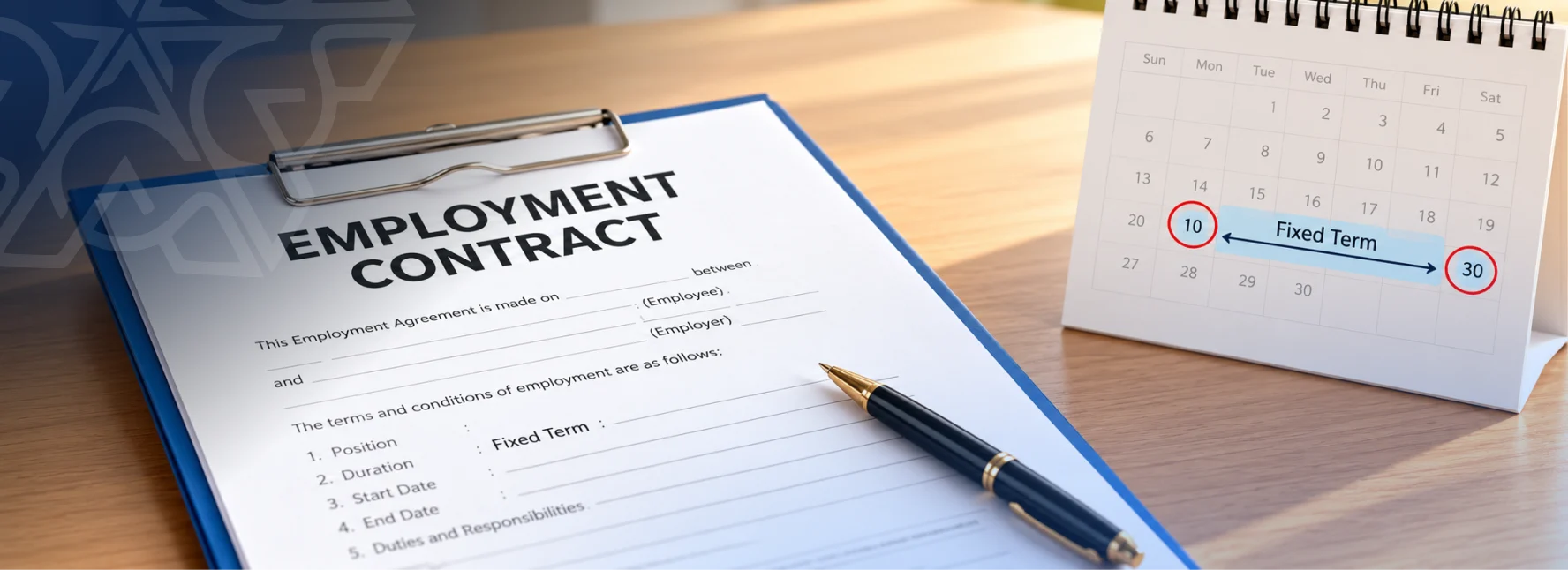
Fixed-term employment is an arrangement in which an employer hires a worker under a written employment contract for a specified period, with a defined start and end date. It’s commonly used for project-based work, seasonal demand, or temporary staffing needs. Under India’s Industrial Relations Code, 2020, eligible fixed-term employees are entitled to applicable wages, benefits and statutory protections.
Planning to hire employees on a fixed-term basis? Make sure your contracts, benefits and employment terms are structured correctly.
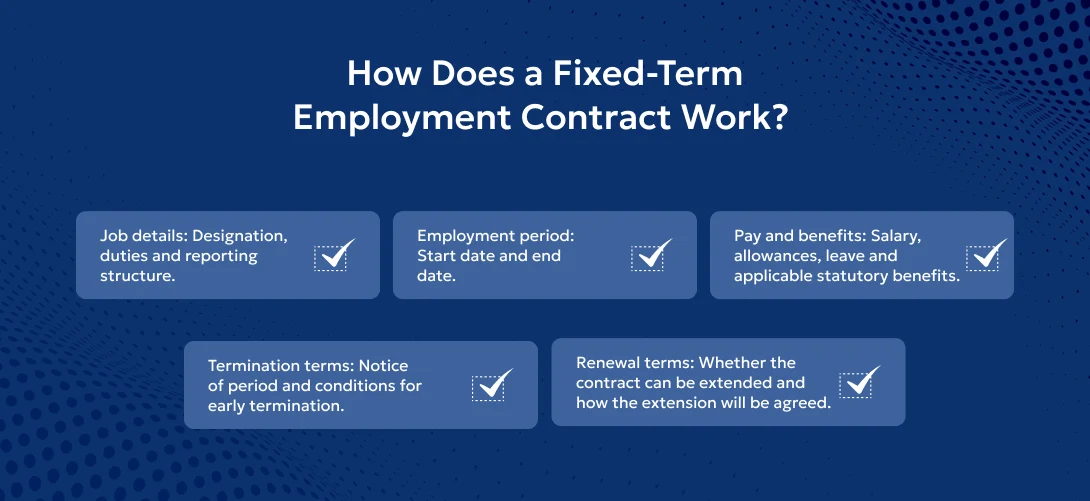
A fixed-term employment contract defines the employee’s role, salary, working conditions, and employment duration. It also explains how the contract can end or be renewed.
The contract typically includes:
The contract ends on its specified date unless the parties agree to an extension. Employers should document any renewal in writing and ensure the revised terms comply with applicable labour laws.
The main difference lies in the employment duration and who employs the worker. These distinctions help businesses determine the right hiring arrangement and understand their compliance responsibilities.
| Employment type | How it works |
|---|---|
| Fixed-term employment | The employer hires a worker directly under a written contract for a specified period, with a defined start and end date. |
| Permanent employment | The employee has no predetermined contract end date. Employment continues until it ends under applicable terms and laws. |
| Contract employment | The term can refer to different arrangements, including fixed-duration employment or work through a contractor. The actual relationship determines the applicable obligations. |
Avoid ambiguity in contract duration, renewal terms, employee benefits and separation conditions with expert HR compliance support.
A fixed-term employment agreement should reflect the actual employment arrangement and comply with applicable labour laws. Before signing, employers should review these key areas:
A carefully reviewed agreement helps employers maintain consistent records, communicate expectations clearly and identify potential compliance gaps before they become disputes.

Under India’s Industrial Relations Code, 2020, fixed-term employment covers workers hired directly by an employer through a written contract for a specific period. Eligible employees are entitled to certain protections and benefits, including fair wages, comparable working conditions, and statutory benefits.
Key Rights and Benefits
Employers should review their employment contracts and benefit policies to ensure they meet the applicable legal requirements.
Need help drafting or reviewing fixed-term employment agreements for your organisation?
Incident:
In 2020, Air India accepted the resignations of several pilots even though they had withdrawn them before acceptance. The pilots challenged the decisions in the Delhi High Court. The group included permanent employees and pilots hired under five-year fixed-term contracts.
Issue:
The dispute concerned whether Air India could accept resignations after the pilots had withdrawn them and whether the affected employees were entitled to reinstatement, back wages and continued employment under their contracts.
Outcome:
On 1 June 2021, the Delhi High Court set aside the challenged decisions in the relevant cases. It ordered Air India to reinstate eligible permanent employees and fixed-term pilots whose contracts had not expired and pay back wages for the relevant period. The airline also had to consider contract extensions in line with the agreed terms and refund excess recoveries from bank guarantees in certain cases. The court did not impose a fine.
Takeaway:
Employers should verify resignation withdrawals before accepting them and follow applicable service rules and contract terms. Failure to do so can result in court-ordered reinstatement, back-pay obligations, and refunds of amounts recovered incorrectly.

If you’re hiring fixed-term employees, you need to make sure your contracts, employee benefits and records meet applicable labour law requirements. Vishaal Consultancy Services can help you review your employment contracts, understand your compliance obligations and identify gaps that need attention through our labour law advisory services.
Whether you’re drafting a new agreement or reviewing existing employment terms, our team can help you organise the required documentation and address payroll compliance needs. This gives you more clarity on your responsibilities and helps you manage fixed-term employment with fewer compliance gaps.
Fixed-term employment gives your business the flexibility to hire specific projects or temporary needs, but clear contracts and proper compliance are essential. Defining employment terms, providing applicable benefits and documenting renewals or exits can help you manage workforce requirements while reducing the risk of disputes.
If you’re planning to hire fixed-term employees or review existing agreements, Vishaal Consultancy Services can help you assess your employment documentation and labour law compliance requirements. Get in touch with our team to identify gaps, clarify your obligations, and manage fixed-term hiring with greater confidence.
Make sure your fixed-term hiring model is clear, compliant and properly documented before onboarding employees.
See Related Blogs
Fill in your details to download our New Labour Code PDF.
Fill in your details to download our exclusive e-learning document.
Fill in your details to download our exclusive e-learning document.
Fill in your details to download our exclusive e-learning document.