

Table of Content
What should an employer check before terminating or relieving an employee? The answer depends on the reason for separation, the employee’s role, length of service, employment contract, and laws applicable to the establishment. The employee termination rules in India vary based on these factors, so employers need to assess the situation carefully before acting.
A proper employee separation involves more than issuing a termination or relieving letter. HR teams need to review employment terms, identify applicable legal requirements, confirm notice obligations, follow due process where necessary, calculate final dues, and complete the required exit formalities. Proper records should also be maintained throughout the process.
In this blog, we’ll explain the key steps employers should follow before terminating or relieving an employee and how the employee termination rules in India apply during the exit process.
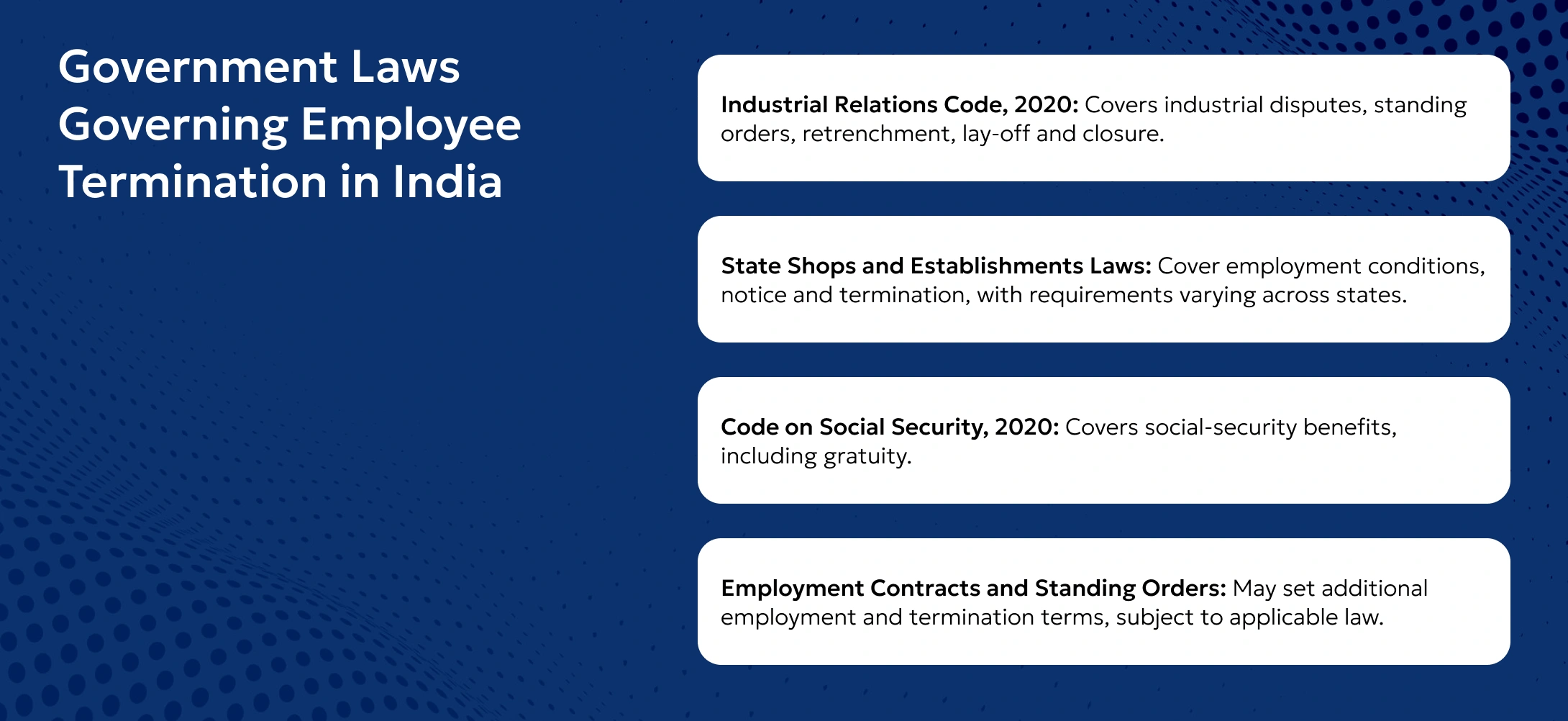
Employee termination is governed by different legal requirements depending on the employee, establishment, and reason for separation. The key frameworks include:
Since requirements can differ across India, employers should identify the rules that apply to their establishment before taking action.
Payroll errors and missed compliance deadlines can become costly as your business grows. Let our experts help you stay on track.
Before you terminate or relieve an employee, first establish why the employment is ending and what requirements apply to the situation. The process can differ depending on whether the employee has resigned, is facing termination for misconduct or is being retrenched.
The following steps will help you move from the initial decision to the employee’s final settlement and exit without missing important requirements. They also help you follow the employee termination rules in India more carefully.
Start by identifying why the employee is leaving. It could be resignation, poor performance, misconduct, redundancy, retrenchment, retirement, or the end of a fixed-term contract.
The reason matters because the required process can change. Retrenchment, for example, is a specific legal concept with separate statutory requirements. Document the reason clearly and make sure it supports the action you’re taking.
Review the employee’s appointment letter and employment contract for the notice period, termination terms and disciplinary provisions. Then check the labour law applicable to the establishment.
These requirements can differ across states. State Shops and Establishments laws may prescribe different rules for notice, termination and employment conditions, so don’t assume that a rule followed in one state applies across India. Also check whether standing orders or retrenchment provisions apply to the employee.
Before you decide the employee’s last working day, check the notice period that applies to you as an employer. It can depend on the employment contract, employee category, length of service, reason for separation and applicable state or central law.
For qualifying retrenchment, the Industrial Relations Code generally requires one month’s written notice or wages in lieu for an employee with at least one year of continuous service, along with the prescribed compensation. Some establishments have stricter requirements, including 3 months’ notice and prior government approval. Make sure you confirm the applicable rule before communicating the final date. This is an important part of following the employee termination rules in India correctly.
If you’re terminating someone for poor performance or misconduct, document the issue and follow the required procedure.
For poor performance:
For misconduct:
The exact process depends on the employee’s status, applicable law, standing orders and company policy.
Once you’ve completed the required process, issue the appropriate termination or relieving letter. State the employee’s effective date, last working day and notice arrangements clearly.
If relevant, include the reason for separation and explain the next steps for the employee’s final settlement. Make sure the letter matches the decision and process you’ve actually followed.
Before closing the employee’s exit, calculate everything you’re required to pay. This may include salary up to the last working day, notice pay, eligible leave encashment, reimbursements, incentives, commissions and other applicable dues.
Check whether gratuity is payable under the applicable law. If the separation qualifies as retrenchment, calculate the required retrenchment compensation as well.
Don’t finalise the settlement until applicable deductions, outstanding amounts and statutory payments have been checked. This is an important part of the employee exit process and should be completed before the separation is closed.
Complete the employee’s remaining exit requirements before treating the separation as closed. This may include collecting company property, completing required clearances, settling outstanding advances and completing knowledge-transfer requirements.
Once the necessary formalities are complete, issue the applicable relieving or experience documents and retain the required employment records.
Make sure the documents you provide accurately reflect the employee’s period of employment and reason for separation.
A wrong step during employee termination can lead to compliance issues and disputes. Get expert guidance before taking action.

Resignation and termination both lead to an employee leaving the organisation, but the circumstances and documentation can differ. Knowing the distinction will help your HR teams follow the correct exit procedure.
| Factor | Resignation | Termination |
|---|---|---|
| Initiated by | Employee | Employer |
| Reason | Employee’s decision | Employer’s stated basis |
| Notice | Usually governed by contract or policy | Contract and applicable law |
| Disciplinary process | Generally not applicable | May apply depending on circumstances |
| Retrenchment requirements | Generally not applicable | May apply if legally classified as retrenchment |
| Exit documentation | Resignation and applicable exit documents | Termination and applicable exit documents |
A few common mistakes can create compliance issues during an employee’s exit. Here are the key areas to watch, especially when applying the employee termination rules in India to a specific case:
A careful approach can help you avoid unnecessary compliance issues and disputes during employee separation. Following the employee termination rules in India based on the specific circumstances can also help you manage the process with greater confidence.

Before issuing a termination or relieving letter, make sure your process, documentation and statutory obligations are handled correctly.
A legally compliant employee exit starts with the right decision and a clear process. By checking the applicable law, reviewing the contract, confirming notice requirements, following due process and settling all applicable dues, you can handle the separation with fewer compliance risks and disputes.
If you’re unsure about the right process for terminating or relieving an employee, Vishaal Consultancy Services can support your business with labour-law and compliance services across India. Get the right guidance before taking action and handle employee separation with greater confidence. Talk to our experts today!
Reduce legal and compliance risks during employee separation with professional labour-law support tailored to your organisation.
Yes, but you can’t assume that probation means no rules apply. You should check the probation clause, notice requirement and applicable state law before ending the employment. If the termination involves misconduct or another specific issue, additional procedures may apply.
Yes. An employee can challenge a termination if they believe you haven’t followed the applicable contract, labour law or required procedure. The grounds for a challenge can depend on the employee’s status, reason for termination, and the law governing your establishment.
No. Retrenchment compensation doesn’t automatically apply whenever an employee is terminated. It depends on whether the separation meets the legal definition of retrenchment and whether the employee and establishment fall within the applicable statutory provisions.
See Related Blogs
BLOGS
Fill in your details to download our New Labour Code PDF.
Fill in your details to download our exclusive e-learning document.
Fill in your details to download our exclusive e-learning document.
Fill in your details to download our exclusive e-learning document.