

Table of Content
Everyone needs time away from work to rest, recover, and maintain their physical and mental well-being, which is why weekly offs form an important part of India’s labour law framework. For employers, ensuring employees receive their weekly rest days is both a legal obligation and a key aspect of responsible workforce management.
Under the Occupational Safety, Health and Working Conditions Code, 2020, employees are generally entitled to a weekly day of rest, subject to applicable rules and exemptions. Non-compliance can lead to legal and compliance risks for businesses.
In this guide, we’ll explain weekly off rules as per new labour law, the laws governing them, whether they’re mandatory in India, common employer mistakes, and how organisations can stay compliant.
A weekly off is a full day of rest given to an employee each week. It isn’t casual leave, earned leave, or any other form of leave. Instead, it’s a statutory rest period provided under India’s labour laws.
Under the Occupational Safety, Health and Working Conditions Code, 2020, employees are generally entitled to a weekly day of rest, subject to applicable rules and exemptions. While Sunday is the most common weekly off, employers may designate another day based on operational requirements.
Are your weekly-off and compensatory-off practices compliant with applicable labour laws? Get them reviewed by an expert.
Yes. Under the Occupational Safety, Health and Working Conditions Code, 2020, a worker generally can’t be required to work for more than six days in a week. This means employees are entitled to a weekly day of rest, subject to applicable rules and exemptions.
A weekly off isn’t a discretionary benefit that employers can grant or withdraw. Even in businesses that operate seven days a week, employers must ensure employees receive their weekly rest day through appropriate scheduling and compliance measures.
Every worker needs adequate rest, and India’s labour law framework recognises this through weekly off provisions. Under the Occupational Safety, Health and Working Conditions Code, 2020, employers must ensure workers receive a weekly day of rest while complying with prescribed working-hour requirements. Here’s what employers need to know:

Avoid disputes around weekly offs, attendance and compensatory holidays with clear, compliant workplace policies.
Weekly off rules in India are governed by labour codes and state-specific laws, depending on the type of establishment.
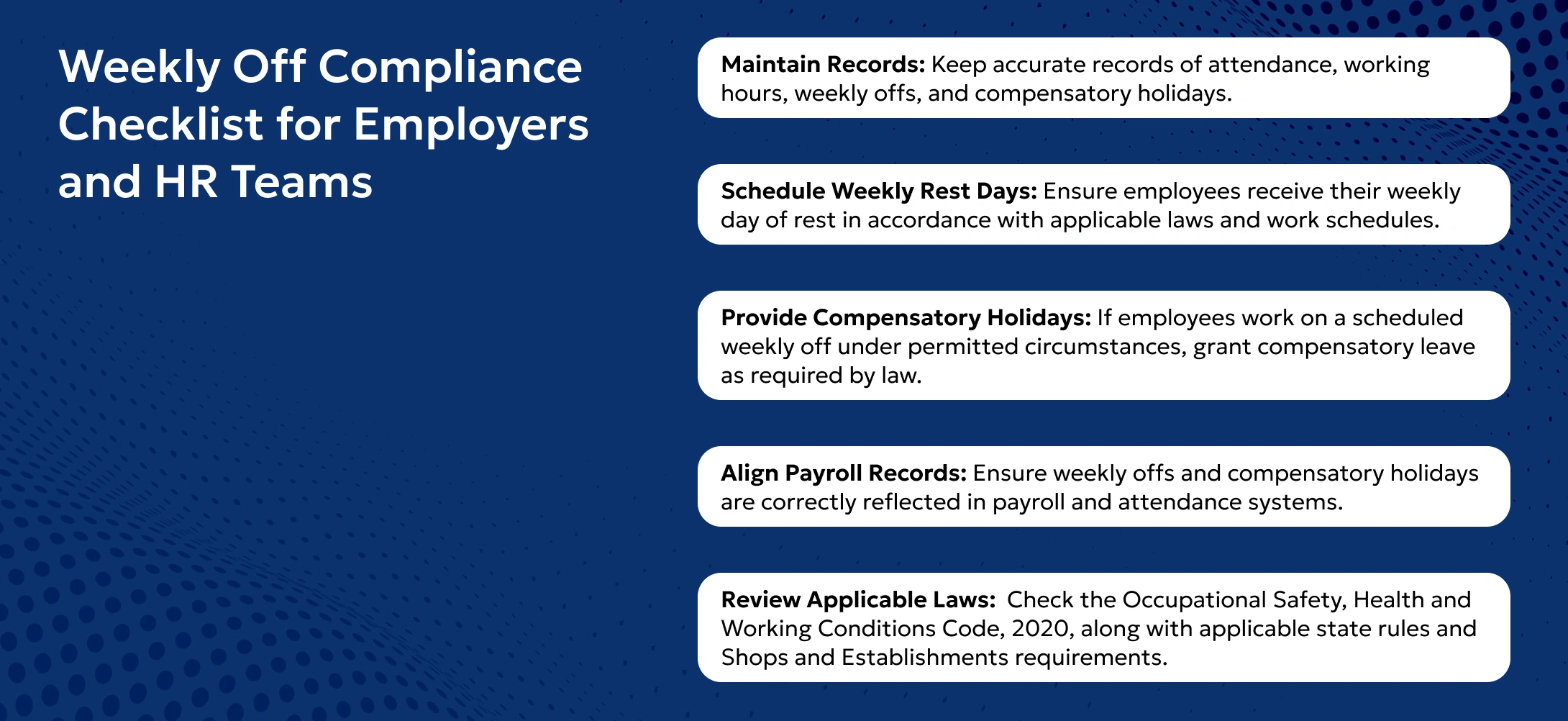
To stay compliant with weekly off requirements under India’s labour law framework, employers and HR teams should:
Despite clear legal requirements, many organisations still run into compliance issues. Here are some common mistakes:
Avoiding these mistakes helps organisations stay compliant while building employee trust and reducing workplace disputes.
Need help managing weekly offs across shifts, locations or different categories of employees?
Court judgments often highlight the importance of compliance better than legislation alone. Let’s look at a case involving a leading footwear company where the denial of statutory weekly offs ultimately led to a Bombay High Court ruling that reinforced weekly rest as a legal employee right.
Context :
The Issue :
The Trigger :
The Impact and Key Takeaway :
The Bombay High Court ruled in favour of the employees, holding that requiring workers to work seven days a week was unreasonable and contrary to law. The Court also clarified that refusing to work under such unlawful conditions couldn’t be treated as misconduct or grounds for termination.
The case ultimately resulted in substantial financial liability for the employer, with compensation ranging from approximately ₹19.5 lakh to ₹33 lakh awarded to affected employees. The ruling serves as a clear reminder that weekly offs are enforceable legal rights, and employers cannot override statutory protections through internal policies or workplace practices.
Make sure your attendance records and weekly-off policies are ready for statutory compliance checks.
Managing weekly off compliance can be challenging, especially for businesses operating across multiple states. From payroll and attendance tracking to statutory records and employee policies, even small gaps can create compliance risks.
Vishaal Consultancy Services helps businesses stay compliant with applicable labour laws by streamlining processes, maintaining required documentation, and keeping HR teams updated on regulatory changes. Our practical approach helps reduce compliance risks, minimise disputes, and ensure your organisation remains inspection-ready.

Weekly offs are a statutory requirement that every employer must take seriously. Providing employees with their legally entitled rest day helps maintain compliance, reduces legal risk, and supports a healthier, more productive workforce. When weekly off policies are implemented correctly, businesses create a workplace that benefits both employees and the organisation.
If you’re unsure whether your current practices meet legal requirements, Vishaal Consultancy Services can help. Our team provides practical labour law guidance, compliance support, and policy reviews to help your business stay compliant, inspection-ready, and focused on growth.
Build a weekly-off policy that works for your operations while meeting applicable labour requirements.
See Related Blogs
BLOGS
Fill in your details to download our New Labour Code PDF.
Fill in your details to download our exclusive e-learning document.
Fill in your details to download our exclusive e-learning document.
Fill in your details to download our exclusive e-learning document.