

Table of Content
What happens when an employer treats its employees unfairly?
Sometimes, the unfair treatment that an employee receives may not be intentional. It could happen because the employer lacks proper awareness or guidance. But whatever the reason, if an employee is treated unfairly, it can lead to serious consequences such as work disruption, legal penalties, court rulings, and even damage to the company’s reputation.
One organisation learned this the hard way when it was penalised for wrongful termination. The management hadn’t followed the right procedures, which led to serious legal action later. This shows that fairness at the workplace isn’t just a moral responsibility but also a legal requirement.
In this blog, you’ll learn what unfair labour practices in labour law mean, the penalties involved, examples of such practices by employers, and how to prevent them in your company.
Unfair labour practices in labour law refer to actions by employers, workers, or trade unions that violate legal rights, result in unfair treatment, or disrupt healthy industrial relations. In simple terms, these are workplace practices that prevent employees from receiving fair treatment or exercising their lawful rights.
Under India’s current labour law framework, including the Labour Codes, employers are expected to follow statutory procedures, maintain fair workplace practices, and respect employee rights. Failure to do so can lead to disputes, legal action, compensation claims, and reputational damage.

Unsure whether your current HR practices could expose your business to labour disputes or compliance risks?
Understanding the legal framework around unfair labour practices helps employers stay compliant, reduce legal risks, and maintain fair workplace practices. While the concept of unfair labour practices originate from earlier labour laws; employers today must also comply with the Labour Codes and other applicable employment regulations.
Some of the key laws relevant to workplace compliance and employer-employee relations include:
If an employer is found guilty of unfair labour practices, the consequences can extend beyond financial penalties.
Here’s a simple breakdown:
Strengthen your workplace policies and reduce the risk of unfair labour practice complaints.
Many employers commit unfair labour practices without realising it, often due to a lack of awareness of legal requirements. Understanding these actions can help you avoid disputes, penalties, and unnecessary workplace conflicts.
Some common examples include:
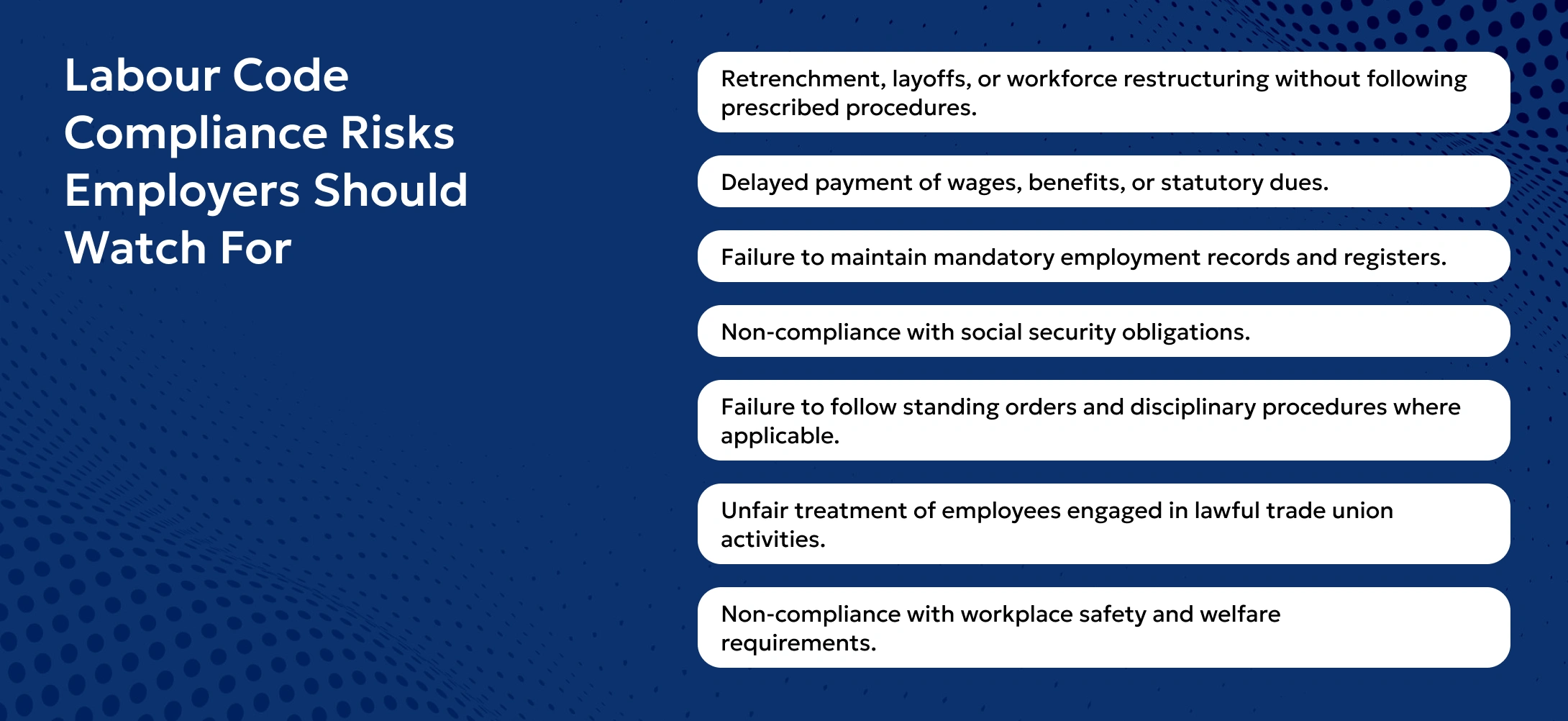
The Labour Codes have increased the focus on workplace compliance, making it important for employers to stay updated with their legal obligations. Even unintentional lapses can lead to disputes, penalties, and operational challenges.
Some common compliance risks include:
Regular compliance reviews and timely legal guidance can help employers identify and address risks before they escalate into disputes.
But what if a dispute has already arisen? Here’s how you can resolve it.
From disciplinary procedures to employee grievances, make sure your HR practices follow the right legal process.
Incident:
Violations:
Outcome:
In 1986, the Supreme Court ruled the closure illegal and held that the company had committed an unfair labour practice under the Maharashtra Recognition of Trade Unions and Prevention of Unfair Labour Practices Act, 1971. The employer was directed to reinstate the affected employees with full back wages from the date of termination.
Although the case was decided under earlier labour laws, the principle remains relevant today: employers must follow statutory procedures and honour legal obligations when making employment decisions.
Prevent avoidable workplace disputes with properly structured HR policies and compliance processes.
Navigating unfair labour practices and workplace compliance can be challenging, especially as labour laws continue to evolve. At Vishaal Consultancy Services, we help employers stay compliant with the Labour Codes, strengthen HR policies, and reduce the risk of disputes.
From compliance audits and policy reviews to dispute resolution and labour law advisory, our experts provide practical guidance to help you build a fair, compliant, and legally sound workplace. While you focus on running your business, we help ensure your workforce practices remain aligned with current labour law requirements.

Fairness at work is more than a legal obligation. It’s the foundation of employee trust, workplace stability, and long-term business success. By understanding unfair labour practices under labour law and staying compliant with current labour laws, employers can reduce disputes, strengthen employee relations, and create a more productive workplace.
If you’re unsure about your compliance obligations or want to minimise labour law risks, Vishaal Consultancy Services can help. Our experts provide practical guidance and compliance support to help your business stay aligned with evolving labour law requirements.
Need an expert review of your employee policies, disciplinary procedures or workforce compliance?
See Related Blogs
BLOGS
Fill in your details to download our New Labour Code PDF.
Fill in your details to download our exclusive e-learning document.
Fill in your details to download our exclusive e-learning document.
Fill in your details to download our exclusive e-learning document.