

Table of Content
Need to apply for an FSSAI license or renew an existing one in 2026? The process depends on your food business and the type of license you need. FSSAI’s latest rules also change how you manage your license, so check what applies to your business before you begin.
FSSAI introduces perpetual validity for licenses and registrations in 2026, subject to applicable conditions. However, you must still follow food safety rules and update your business details when required.
In this guide, you’ll learn how to apply for an FSSAI license online, which documents you need and how to handle an existing license under the new rules. If you need professional assistance, explore Vishaal Consultancy Services’ FSSAI license registration and compliance services.
Perpetual validity means your FSSAI license or registration doesn’t need routine renewal and remains valid under the applicable rules. However, you must continue to follow food safety requirements and update your license details when your business changes.
Food businesses must also stay informed about other regulatory changes. For example, FSSAI has introduced updates to food labeling requirements. Read our guide on FSSAI New Rules 2026 to understand the latest labelling amendments and their compliance requirements.
FSSAI offers three main categories for food businesses: basic registration, a State license, and a Central license. Each category covers businesses with different turnover levels and licensing requirements.
Before you apply for an FSSAI license, check which category fits your food business. Your annual turnover, business activities, and any specific licensing rules determine which one you need. From 1 April 2026, FSSAI revises the turnover limits for these categories.
| FSSAI Category | General Annual Turnover Threshold |
|---|---|
| Registration | Up to ₹1.5 crore |
| State License | Above ₹1.5 crore and up to ₹50 crore |
| Central License | Above ₹50 crore |
These thresholds offer a general guide, but some food businesses have specific licensing requirements. Check the FoSCoS portal to confirm which category applies to your business.
If you already hold an FSSAI license, check out the official migration rules before changing your existing license or applying for a new one.
Food businesses may also need additional registrations depending on their location and operations. For example, restaurants, cafés and food retail establishments may fall under the applicable Shops and Commercial Establishments Compliance requirements.
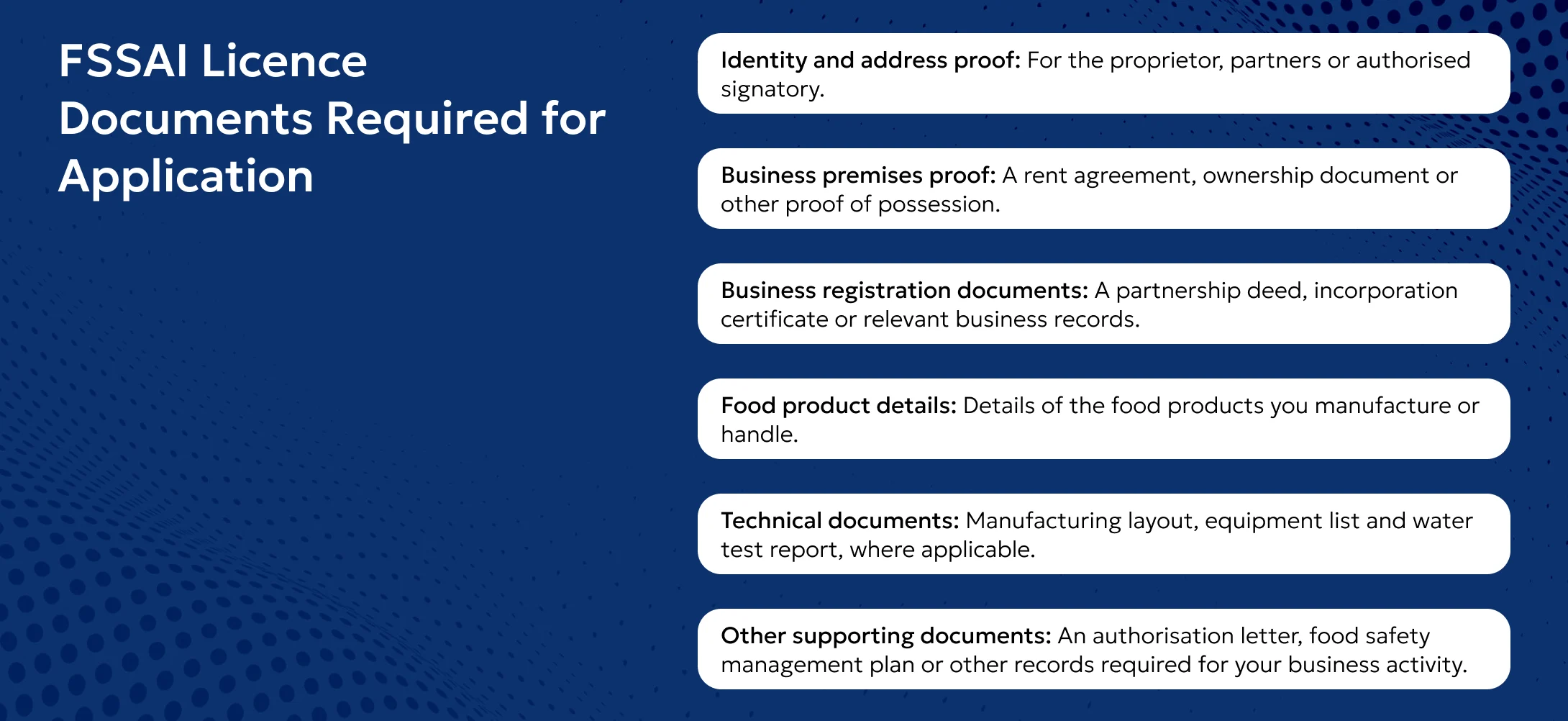
The exact requirements depend on your business structure and activities.
Manufacturers and other specialized food businesses may need additional documents. Prepare the documents that apply to your business before starting the application.
If you are setting up a new partnership or business entity, you may also need to complete the applicable business registration procedures. Learn more about Firm Registration in Karnataka and the documentation involved.
Once you’ve identified your license category and gathered the required documents, follow these steps to apply online:
1. Start your application: Open the FoSCoS application portal and select a new registration or license.
2. Select your state: Choose the state where your food business operates.
3. Choose your business activity: Select the relevant food business category and check the eligibility requirements.
4. Fill in the application form: Enter your business name, premises address and other required details.
5. Upload your documents: Attach the supporting documents required for your application.
6. Pay the application fee: Pay the fee applicable to your license category.
7. Submit the form: Review your details, submit the application, and save your reference number.
Make sure your application details match your supporting documents. After submitting the form, track your application’s status and respond to any queries from the licensing authority.
Apart from FSSAI registration, some businesses may need permission from their local municipal authority. If you’re operating a food business in Bangalore, read our guide on BBMP Trade License in Bangalore 2026: How to Apply and Renew to understand the application process and local requirements.
If you’re looking for the FSSAI license renewal online process, first check the status of your existing license or registration. The 2026 rules introduce perpetual validity, subject to applicable conditions, so you may not need to renew your existing license routinely.
Follow these steps to check what you need to do:
1. Access to your existing record: Open FoSCoS and use the relevant facility to retrieve your license or registration details.
2. Verify your details: Check your license number, business name, premises address and approved food business activities for accuracy.
3. Check your license status: Confirm whether your record remains valid, has expired or requires any action under the applicable rules.
4. Identify any changes needed: If your business details or activities have changed, check whether you need to modify your existing records.
5. Follow the applicable instructions: If your record requires migration, modification, or another action, complete the relevant process. If your license has expired, confirm the steps that apply to your specific case before continuing operations.
Don’t assume that every existing license needs renewal, or that perpetual validity automatically resolves an expired license. Check your records and follow the requirements that apply to your business.
Businesses managing several registrations can benefit from maintaining a regular compliance review. Our Statutory Compliance Checklist 2026 for Employers in India explains how employers can track important compliance responsibilities.

If your license shows an old expiry date, don’t immediately apply for a new one. First, check its status and any instructions linked to your records. If you’re unsure how to proceed, contact your licensing authority for guidance.
Perpetual validity doesn’t cancel a suspension or cancellation order. If the authority has suspended or cancelled your license, follow its instructions to resolve the issue before continuing your business operations.
If you’ve changed your business name, address, food products or approved activities, you may need to modify your FSSAI license. The requirements depend on the changes you’ve made.
Use the modification option on FoSCoS and submit the required documents. You don’t need to apply for renewal just to update your details unless instructed to do so.
If your business is also relocating, expanding or changing its commercial activities, review whether your other registrations need updates. Our guide to Understanding Shops and Establishment Registration in India explains related registration requirements and employer responsibilities.
Avoid these six common mistakes to prevent application delays, unnecessary paperwork, and compliance issues.
If you move your business, change your food products or start a new activity, check whether you need to modify your existing license before making the change.
Managing FSSAI requirements alongside other business regulations can become challenging as operations expand. Professional statutory compliance services can help businesses organize their wider regulatory responsibilities.

Applying for an FSSAI license or managing an existing one starts with understanding your business requirements. Check your license category, prepare the required documents, and follow the latest rules. Although FSSAI licenses now have perpetual validity, subject to applicable conditions, you must still meet food safety requirements and update your license details when necessary.
Vishaal Consultancy Services can help you with FSSAI license applications, documentation and modifications. Contact us to discuss your requirements and get support for your food business.
See Related Blogs
BLOGS
BLOGS
Fill in your details to download our New Labour Code PDF.
Fill in your details to download our exclusive e-learning document.
Fill in your details to download our exclusive e-learning document.
Fill in your details to download our exclusive e-learning document.