

Table of Content
Hiring the right person sounds simple until a role stays vacant for months or a new employee leaves within weeks. Many organisations face this problem more often than they would like to admit. A poorly planned hiring process can slow down business operations, increase costs, and affect team morale.
This is where understanding the types of recruitment comes handy. When employers rely on only one hiring approach, they often miss out on better talent opportunities. But when recruitment strategies are chosen carefully, businesses can attract the right people faster and build stronger teams.
In this guide, we’ll explore the different recruitment methods used by organisations today. We’ll also look at how employers can choose the right approach based on their hiring needs and long- term workforce goals.
Recruitment is a key HR function that focuses on hiring suitable candidates for job roles. It plays an important role in ensuring organisations bring in the right talent.
In simple terms, recruitment in human resource refers to the process of identifying, attracting, screening, and selecting candidates for job vacancies.
A typical recruitment process includes:
Recruitment plays a key role in human resource management because the people an organisation hires directly influences productivity, team performance, and overall business outcomes. A structured recruitment process helps organisations attract suitable candidates and avoid poor hiring decisions.
In simple terms, effective recruitment helps organisations build a capable and stable workforce.
With this understanding, let’s look at the different types of recruitment used by organisations.

Internal recruitment refers to filling job vacancies with employees who are already working in the organisation. Instead of searching outside, the company selects candidates from its existing workforce.
This approach is commonly used when employees already have the required experience and understand the organisation’s processes and work environment.
Internal recruitment allows organisations to fill roles faster because existing employees are already familiar with the organisation’s structure and expectations. It also supports employee growth by providing clear career progression opportunities.
However, internal hiring limits the talent pool to current employees and may reduce the chances of bringing in new ideas from outside the organisation.
External recruitment refers to hiring candidates from outside the organisation to fill job vacancies. Organisations use this method when the required skills or experience are not available within the existing workforce.
This approach allows companies to reach a larger talent pool and bring in candidates with different experiences and perspectives.
External recruitment helps organisations access specialised talent and expand their workforce when needed. However, the hiring process may take longer because new candidates need to be evaluated and later trained to adapt to the organisation’s work environment.
Direct recruitment refers to hiring candidates without involving intermediaries such as recruitment agencies. The organisation’s HR team manages the entire hiring process and interacts with candidates directly.
This approach is commonly used when organisations want more control over the recruitment process or need to fill roles quickly.
Direct recruitment allows HR teams to interact with candidates directly and assess them during the initial stage. It also helps organisations manage the hiring process according to their own requirements and timelines.
Indirect recruitment involves attracting candidates through advertisements and public communication rather than approaching them directly. Organisations share job openings through different platforms and invite interested candidates to apply.
This method is often used when organisations want to reach a larger group of job seekers.
Indirect recruitment helps organisations reach a wider audience and receive applications from candidates across different locations. However, it can also lead to a large number of applications, which requires additional time for screening and shortlisting.
Third party recruitment involves external agencies or consultants managing part of the hiring process for an organisation. These agencies support companies in identifying and shortlisting suitable candidates.
Organisations usually rely on this method when internal HR teams need additional support or when hiring requires specialised talent.
Campus recruitment involves organisations hiring fresh graduates directly from colleges and universities. Companies visit educational institutions to identify and select candidates for entry level positions.
Organisations often use this method to build a pipeline of young talent and bring new professionals into the workforce.
Online recruitment involves using digital platforms to attract and hire candidates. Organisations rely on internet- based tools to reach job seekers and manage applications.
With more candidates searching for jobs online, companies increasingly use digital channels to promote opportunities and connect with potential employees.
Employee referral recruitment involves current employees recommending potential candidates for open positions. Many organisations encourage this practice because employees usually understand the company’s culture and job expectations.
Referred candidates often have some prior awareness of the organisation, which can make the transition into the workplace smoother.

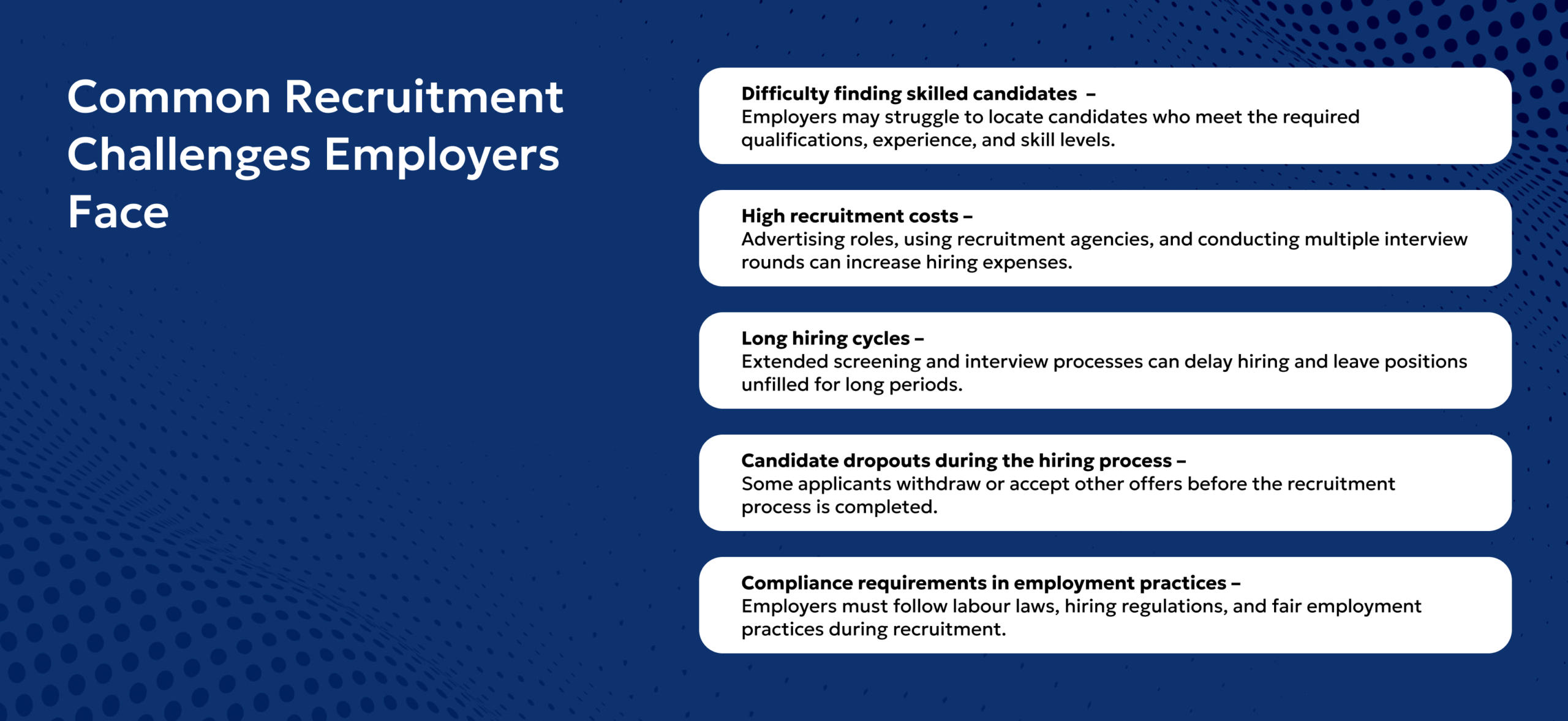
Recruitment plays an important role in building a strong and dependable workforce. When employers and organisations understand the different types of recruitment, they can choose hiring methods that match their roles, timelines, and workforce needs. This helps businesses make better hiring decisions and build stronger teams.
If your organisation wants to create a more structured and compliant recruitment process, Vishaal Consultancy Services can support you through Virtual HR services. With the right HR guidance, employers and businesses can streamline hiring, stay compliant with HR regulations, and build teams that support long-term growth.
Employers can choose the right types of recruitment by looking at the role, required skills, urgency, and budget. For example, employee referrals are good for quick hiring, while campus recruitment helps build future talent. Using more than one method hiring method often works best.
Choosing the right types of recruitment helps employers reach candidates with the right skills and experience. For instance, external recruitment brings fresh ideas, while internal recruitment rewards loyalty and experience, both improving overall employee quality and fit.
Organisations can use virtual HR services by Vishaal Consultancy Services to make hiring easier. We help set up recruitment processes, follow HR rules, and manage documents, so employers can hire efficiently and build strong teams
See Related Blogs
BLOGS
Fill in your details to download our exclusive e-learning document.
Fill in your details to download our exclusive e-learning document.
Fill in your details to download our exclusive e-learning document.