

Table of Content
Late-night emails. Weekend calls. Messages that start with “just a quick call” but never really end. For many employees, work doesn’t stop when office hours do, and over time, this constant pull builds stress, burnout, and quiet frustration. It also creates risks that employers often don’t notice until it’s too late.
For years, many organisations allowed this culture to grow. Not always on purpose, but by normalising availability and calling it commitment. The line between flexibility and pressure slowly disappeared, and personal time became negotiable.
That’s where the right to disconnect bill steps in. It brings clarity, accountability, and balance. In this blog, we explain what the law means, how employer duties change, and what HR leaders in India should do now to stay compliant and fair.
The right to disconnect bill in India gives employees a clear right to switch off from work communication after official working hours. This includes calls, emails, messages, and digital work tools, ensuring employees can rest without fear of penalties or negative consequences.
The bill does not aim to reduce effort or delay work. Instead, it sets healthy boundaries, so personal time stays protected, and mental strain does not build quietly. Employers are expected to respect defined working hours and avoid creating pressure on employees to stay online all the time.
At present, the Right to Disconnect Bill 2025 has been introduced in Parliament and is under discussion. It has not yet been passed into law, but it signals a growing policy focus on employee well-being and sustainable work practices.
In practical terms, the bill focuses on:


The right to disconnect bill strengthens existing Indian labour laws by clearly defining employer responsibilities and employee rights regarding working hours, overtime, and well-being.
Key legal foundations include:
The right to disconnect bill changes how HR and leaders shape workplace culture, making policies and behaviour equally important in protecting employee time and well-being.
HR teams now need to revisit key areas, including:
The right to disconnect bill sets clear expectations for employers on working hours, after-hours communication, and employee well-being. It protects personal time, limits non-essential contact, and ensures employees aren’t penalised for disconnecting.
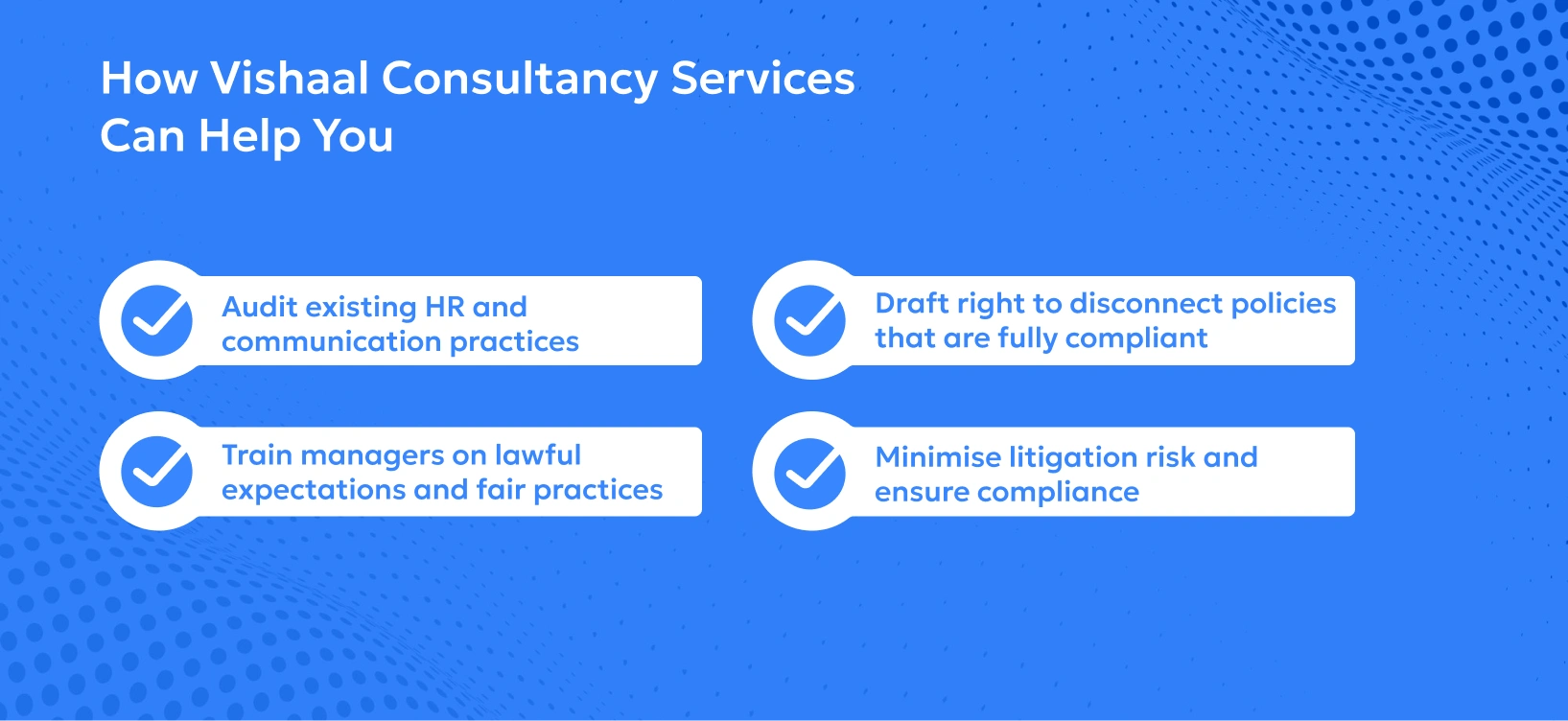
At Vishaal Consultancy Services, we guide organisations through these changes. From auditing HR practices to drafting compliant policies and training managers, we help you stay aligned with the law, reduce legal risks, and foster a fair, productive workplace. Contact us today to ensure compliance and protect your team.
Yes even the senior managers are included in the right to disconnect bill. Employers must set clear boundaries and document after-hours expectations to ensure fairness and prevent misuse of this policy.
Employers should clearly define what counts as an emergency, set approved escalation channels, and document any after-hours approvals. This ensures urgent work is handled fairly without violating employees’ right to disconnect.
If managers ignore the policies, having them on paper isn’t enough. Liability depends on actual workplace behavior. Ignoring the rules can lead to legal penalties, employee complaints, low morale, and reputational damage, making training, monitoring, and enforcement essential under the Right to Disconnect Bill 2025.
See Related Blogs
BLOGS
Fill in your details to download our exclusive e-learning document.
Fill in your details to download our exclusive e-learning document.
Fill in your details to download our exclusive e-learning document.