

Vishaal Consultancy Services

Home / blogs / notice period rules in India

Is Notice Period Mandatory? A Deep Dive into Notice Period Rules in India

notice period rules in India

Introduction

Not sure if you or your employee legally needs to serve a notice period before quitting?

In one real case, a long-time employee was asked to leave during their employment notice period over misconduct claims. The employer didn’t follow disciplinary procedures or prove the allegations. They also withheld the employee’s pending salary. The court later ruled in the employee’s favour, stating that wages for the notice period can’t be denied unless proper process is followed.

Cases like this are more common than you’d think. Whether you’re managing HR at a small business or scaling a startup, knowing the notice period rules in India can protect your company from legal and operational mess. Let’s walk through what the law actually says and how to stay on the right side of compliance.

Are Notice Periods Mandatory Under Indian Labour Laws?

So, is notice period mandatory in India? The answer isn’t a simple yes or no. In most cases, it depends on what’s written in your employment contract or company policy. For example, if your contract says 60 days, then both employer and employee are expected to follow it. But if there’s no mention of notice, then technically, there may be no legal requirement.

Some laws do apply in specific cases. For example, the Industrial Disputes Act 1947 asks employers to give 30 days’ notice or pay in lieu when terminating a “workman.” Shops and Establishments Acts in states like Maharashtra may require notice after six months of service. But the Factories Act doesn’t directly mention notice periods.

In most private jobs, the contract matters more than the law. Therefore, it’s important for companies to clearly define notice terms and for employees to check what they’ve agreed to before joining. When in doubt, always go back to what’s written in your employment agreement.

notice period rules in India

Notice Period Rules for Employers

Understanding notice period rules for employers in India is important for maintaining fair, legal, and ethical practices during exits.

Here’s what the law and good practice recommend:

  • Notice periods must be reasonable like 30–90 days depending on job roles.
  • The rules should be applied uniformly to avoid bias claims.
  • You can’t alter existing employment notice periods without consent.
  • Payment in lieu is acceptable if clearly defined in contracts.

Common mistakes employers make:

  • Imposing unreasonable durations like six months
  • Setting different terms for similar job levels without valid reason
  • Using notice periods punitively
  • Failing to document terms in writing
Struggling to understand your notice rules as an employer?

Notice Period Rules for Employees in India

Many employees feel stuck during their notice period, but understanding your rights can help. Usually, you need to serve the full period or pay the amount written in your contract. But if you have a valid reason like a health issue or family emergency, you can speak to your employer and ask for an early release. Some employers may agree, and if the notice terms are too long or stop you from joining a new job, the law may not support the employer.

Even while serving your notice, you have the right to fair treatment. The employer can’t overload you with unreasonable tasks or create a stressful work environment. If they do so, then you can file a complaint against them.

What Should a Notice Period Policy in India Include?

A solid policy reduces ambiguity and future conflicts. Here’s what it should clearly define:
  • Duration: 30 days for junior staff, 60 for managers, 90 for senior roles
  • Buyout clauses: When employees or employers can pay in lieu
  • Handover duties: Process documentation, team briefings, knowledge transfer
  • Waiver scenarios: Emergencies, relocations, mutual agreements
  • Consequences: Impact on final settlement, experience letters, and rehiring

While having a clear employment notice period policy sets expectations upfront, real-life situations aren’t always black and white. Let’s look at when notice periods can actually be waived off, depending on mutual understanding or unavoidable circumstances.

Need help drafting your notice period policy?

When Can Notice Period Be Waived Off?

There are times when you don’t have to serve the full notice period, and that’s usually when both sides agree or there’s a genuine reason. This could be anything from a family emergency or sudden transfer to a company shutting down or proven misconduct by an employee.

Sometimes, employers may offer to pay instead of asking someone to work through the notice period, and that’s perfectly legal if it’s part of the company policy. The key is to put everything in writing. Don’t rely on verbal promises, because if things go wrong, written proof is the only thing that’ll protect you.

notice period rules in India
Yes, notice period rules are legal in India, but they depend on the type of job and sector. In factories, shops, and hotels, government laws decide the rules. In IT, startups, and service companies, it depends on what is written in the job contract. Government jobs usually have longer notice periods. Freelancers or gig workers only follow notice rules if their contract says so. No matter the job, the rules must be fair. They should be written clearly, not too long, and should not be used to trap the employee. Some jobs, like banking, may ask for a longer notice to protect client or company information.

A Real-World Case Study

A significant legal precedent emerged from a case clarified key principles about notice period and wage entitlements that still shape employment practices in India.
Context:
The case involved an employee who was terminated during his notice period due to alleged misconduct. The employer claimed that since the dismissal was for misconduct, they weren’t liable to pay wages for the remaining notice period.
The Issue:
The core legal question was whether employees retain their right to notice period wages even when terminated for misconduct. Key compliance gaps included:
  • Misunderstanding that misconduct automatically cancels notice period pay
  • Skipping due process during termination
  • Unclear rules around withholding notice period wages
  • No standard way to handle misconduct during resignation or transition
The Trigger:
The employee took the matter to court, arguing that the employer didn’t follow procedure and never proved the misconduct allegations properly.
The Impact:
The court clarified that employees are entitled to full notice period wages, even if terminated for misconduct, if due process isn’t followed.
  • Employers can’t withhold wages arbitrarily
  • Proper disciplinary steps must be taken
  • Employee rights during notice periods are legally protected
  • The ruling influenced how companies manage such cases today
Why It Happened:
The employer assumed misconduct voids notice pay, without considering legal safeguards or process. They overlooked the need to prove misconduct and follow lawful termination steps.
What We Learn:  
Notice period rules in India safeguard employee rights. Even if misconduct is suspected, employers must follow fair procedures. This case shows that structure and legality matter more than assumptions, especially during sensitive exit phases.

Making Notice Period Compliance Simple for Your Business

We get it, exits can feel chaotic at times. But with a clear policy and the right systems in place, managing them becomes much easier and far less stressful.

Steps Employers Should Follow to Comply
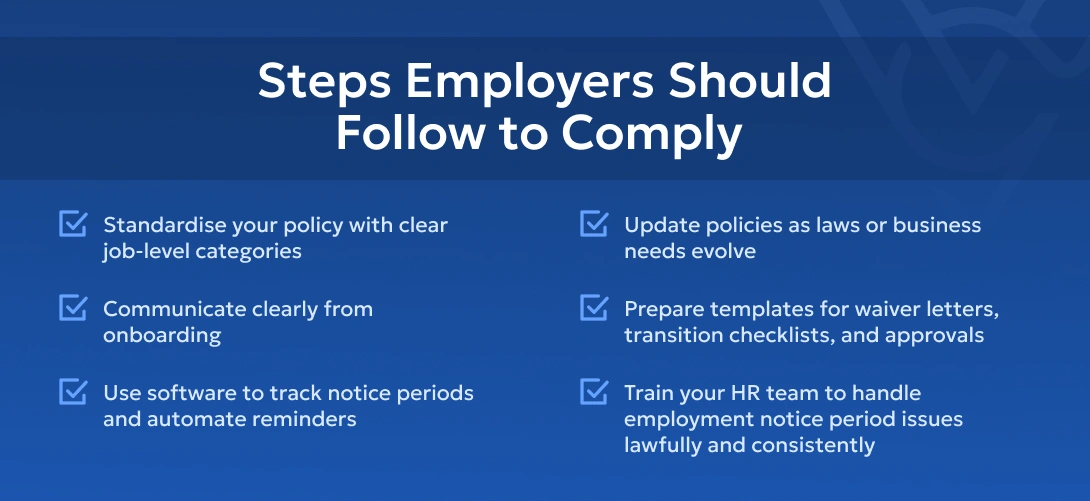
  • Standardise your policy with clear job-level categories
  • Use software to track notice periods and automate reminders
  • Communicate clearly from onboarding
  • Update policies as laws or business needs evolve
  • Prepare templates for waiver letters, transition checklists, and approvals
  • Train your HR team to handle employment notice period issues lawfully and consistently
Remember, the goal is to ensure smooth exits, not to penalise employees.
notice period rules in India
Unsure about compliance?

Conclusion

Managing notice period rules in India can feel like walking a tightrope. One small misstep, like a missed timeline or unclear policy, can lead to legal issues or broken trust. The law tries to offer protection, but let’s be honest, it can be confusing. No wonder many businesses find this part tricky.

But the good news? You don’t have to figure it out alone. Vishaal Consultancy Services supports you with expert labour law advisory and complete statutory compliance solutions. We guide you with policies that work, without the legal stress. Let’s make compliance feel less like a task and more like peace of mind.

See Related Blogs

Scroll to Top