

Vishaal Consultancy Services

Home / blogs / Minimum Wages in Karnataka for FY 2026–27

Minimum Wages in Karnataka for FY 2026–27: Latest Rates & Employer Compliance Guide

Minimum Wages in Karnataka

Introduction

What happens when an employer misses a simple wage update? At first, it may not look serious. Salaries are processed, employees are paid, and everything seems fine. But slowly, small gaps start showing up. Incorrect wages, compliance issues, and sometimes even legal notices.

In reality, minimum wages aren’t just numbers updated every year. They directly affect payroll, statutory compliance, and employee trust. Missing even one revision can create problems that are difficult to fix later.

If you are an employer or managing HR, understanding the Minimum Wages in Karnataka for 2026–27 is important. In this blog, we’ll help you understand the latest rates, how to apply them, and what you need to do to stay compliant without confusion.

What Are Minimum Wages and Why Do They Matter?

Minimum wages are the lowest wages that an employer must legally pay to employees. These are defined under labour laws to ensure fair pay and protect workers from underpayment.

For employers, minimum wages aren’t just a rule to follow. They are part of your payroll foundation. Paying correct wages helps you:

  • Stay compliant with labour laws
  • Avoid penalties and disputes
  • Build trust with employees
  • Maintain clean audit records

So yes, it isn’t just about paying salaries. It is about paying them correctly.

Now that the basics are clear, let’s understand what has changed for 2026–27.

Minimum Wages in Karnataka for 2026–27 (Latest Update)

Minimum wages in Karnataka are revised at regular intervals to keep up with changing economic conditions. For the financial year 2026–27, the updated rates are applicable from April 1, 2026. These wages aren’t the same across the state, as they vary based on factors such as the employee’s skill level, the location or zone of work, and the type of industry.

Another important thing to understand is that minimum wages are made up of two parts: the basic wage and the Variable Dearness Allowance (VDA). While most employers focus only on the final wage amount, the structure behind it plays a key role in ensuring proper compliance.

Let’s break this down further so it becomes easier to apply.

How Minimum Wages Are Structured in Karnataka

Before applying minimum wages, it is important to understand how they are structured. Once the structure is clear, it becomes much easier to calculate wages correctly and avoid compliance mistakes.

Minimum wages in Karnataka are based on three key factors: skill level, location, and wage components. Let’s look at each of them.

1. Skill-Based Classification

Employees are classified based on the nature of their work and level of expertise. This classification directly impacts the minimum wage applicable to them.

  • Unskilled: Helpers, cleaners, loaders
  • Semi-skilled: Machine assistants, drivers
  • Skilled: Electricians, technicians
  • Highly skilled: Supervisors and specialised roles

Getting this classification right is important as even a small error can lead to incorrect wage payments and compliance issues for you later.

2. Zone-Based Classification

Karnataka follows a zone system, which means wages vary depending on where the business operates. This is done to account for differences in cost of living across regions.

  • Zone I: Bangalore (BBMP area)
  • Zone II: Other major cities
  • Zone III: District headquarters
  • Zone IV: Rural areas

Because of this, the same job role can have different minimum wages in different locations. This is one of the most common areas where employers get confused.

3. Wage Components

Minimum wages are made up of two main components:

  • Basic Wage
  • Variable Dearness Allowance (VDA)

In simple terms:
Minimum Wage = Basic Wage + VDA

The VDA component changes based on inflation, which means wage rates aren’t fixed for the entire year. Regular updates are necessary to stay compliant.

Now that the structure is clear, the next step is to look at the latest minimum wage rates and understand how they apply in practice.

Minimum Wages in Karnataka

Latest Minimum Wage Rates (2026–27)

The table below provides a simplified reference for minimum wages in Karnataka for 2026–27, effective from April 1, 2026. These rates are applicable for employees in Shops and Commercial Establishments in Karnataka.
Skill Level Zone I (₹) Zone II (₹) Zone III (₹) Zone IV (₹)
Highly Skilled 19,972 19,238 18,538 17,872
Skilled 18,570 17,902 17,266 16,661
Semi-Skilled ~17,296 ~16,689 ~16,111 ~15,560
Unskilled ~16,137 ~15,585 ~15,060 ~14,559
Important to note:
  • These wages include Basic + Variable Dearness Allowance (VDA)
  • The 2026–27 revision is based on CPI increase and updated VDA calculations
  • Rates may vary slightly depending on the industry and job designation
Knowing the rates alone isn’t enough. You also need to understand how to apply them correctly in your payroll.

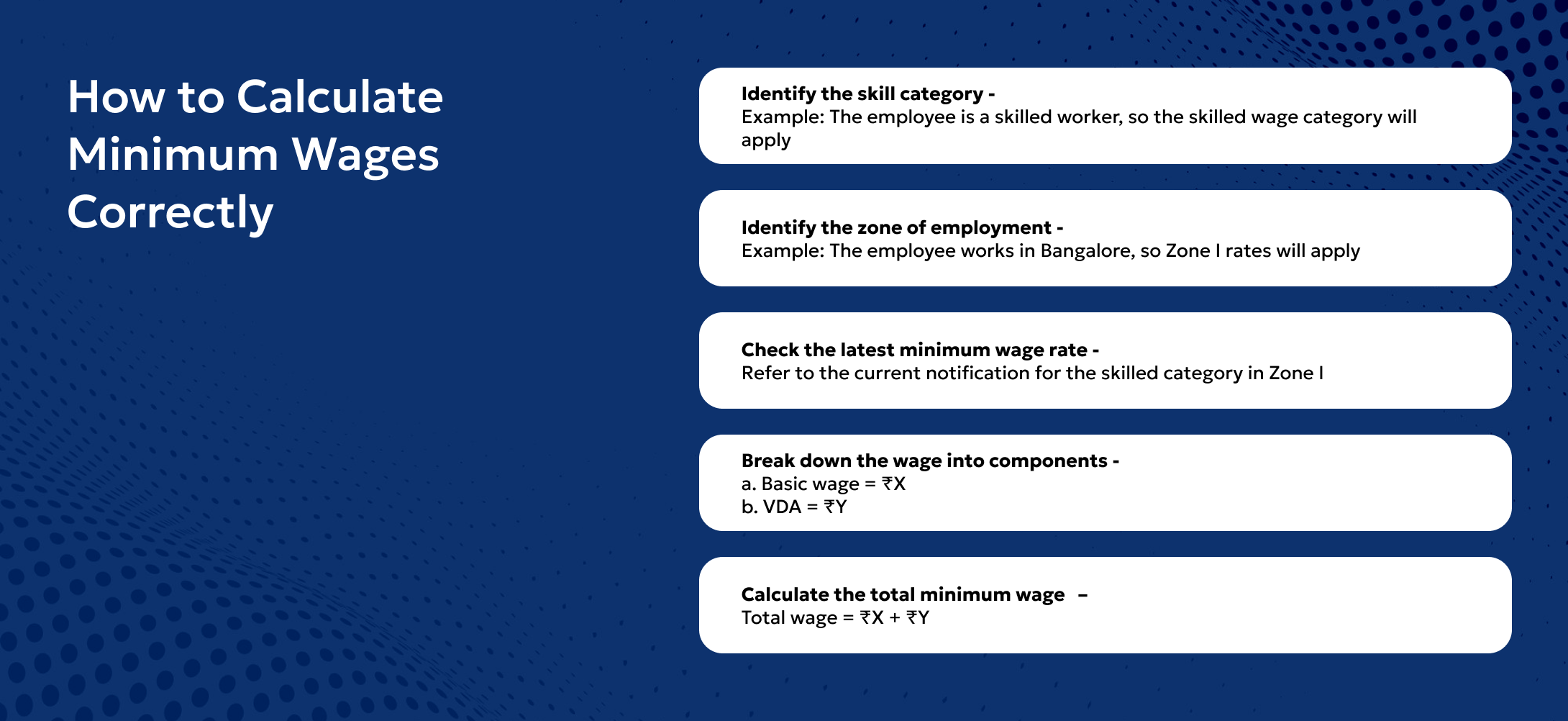
How to Calculate Minimum Wages Correctly

Applying minimum wages is where many employers tend to get confused. But when you follow a step-by-step approach with a simple example, the process becomes much easier to understand and apply.
Let’s take an example of a skilled worker in Zone I (Bangalore)

1. Identify the skill category

a. Example: The employee is a skilled worker, so the skilled wage category will apply

2. Identify the zone of employment

a. Example: The employee works in Bangalore, so Zone I rates will apply

3. Check the latest minimum wage rate

a. Refer to the current notification for the skilled category in Zone I

4. Break down the wage into components

a. Basic wage = ₹X

b. VDA = ₹Y

5. Calculate the total minimum wage

a. Total wage = ₹X + ₹Y
Note: wages can vary from industry to industry.

This final amount is the minimum wage that must be paid. It can’t be reduced or adjusted below the prescribed limit.

When approached step by step, the calculation is quite straightforward. It comes down to using the correct category, applying the right zone, and working with the latest updated rates.
Minimum Wages in Karnataka

Employer Checklist for Minimum Wage Compliance

Managing minimum wage compliance becomes easier when you follow a clear and consistent process. A simple checklist helps keep things organised and reduces the chances of errors.

Here’s a quick list to follow:

  • Update the latest wage rates in your payroll system before processing salaries
  • Verify employee classifications and apply the correct zone-based wages
  • Ensure contractors and third-party workers are also paid as per minimum wage rules
  • Maintain proper records, including wage registers and salary slips
  • Ensure wages are paid on time without delays
  • Track VDA updates and revise wages whenever required
Following this regularly helps keep payroll smooth and compliant. Beware that small gaps can still occur if updates are missed or not reviewed on time.

Common Mistakes Employers Make

Even well-managed organisations can miss small details when it comes to minimum wage compliance. These may look small at first, but they can lead to bigger problems later.
  • Using old wage rates without realising that new rates have been updated, can lead to underpaying employees.
  • Missing VDA updates, may affect the final wage calculation and lead to incorrect payments.
  • Putting employees in the wrong skill category, changes the minimum wage they should receive.
  • Applying the wrong zone rates, especially when the business operates in more than one location.
  • Assuming contractors handle wage compliance, while the responsibility still remains with the employer.
Most of these mistakes happen by accident. They usually come from missed updates or lack of clarity. Regular checks can help organisations avoid these issues and stay compliant.

Consequences of Non-Compliance with Minimum Wage Regulations

Non-compliance with minimum wage rules may not show immediate impact, but when it does, it can affect your business in several ways.
  • Labour inspections may be initiated by authorities, especially if there are complaints or irregularities.
  • Financial penalties can be imposed for not following the prescribed wage rates.
  • Back wages may need to be paid to employees if underpayment is identified.
  • Legal disputes can arise from employee complaints or non-compliance issues.
  • Loss of credibility can impact employee trust and the organisation’s reputation.
Additionally, hiring workers through contractors doesn’t remove responsibility. The principal employer is still accountable for ensuring that minimum wages are paid correctly.

How Vishaal Consultancy Services Can Help You

Minimum wage compliance involves more than just checking numbers. It requires proper classification, accurate payroll, and regular updates. At Vishaal Consultancy Services, businesses get support with:
  • Correct wage calculation and payroll processing
  • Employee classification and compliance checks
  • Maintaining records for audits
  • Managing contractor compliance
  • Staying updated with labour law changes
70% of businesses struggle to keep up with frequent regulatory amendments leading to unintentional violations, resulting in heavy penalties. Don’t be one among them.
Protect your business and stay complaint

Conclusion

Minimum wages aren’t something that can be updated once and ignored. They are a regular part of payroll and compliance that needs ongoing attention. From paying employees correctly to staying ready for audits, everything depends on how accurately these wages are followed. Even small mistakes can create issues later if not corrected on time.

If handling wage updates, classifications, and compliance feels difficult, getting the right support can help. Vishaal Consultancy Services assists organisations in managing labour law compliance in a simple and structured way, helping businesses stay compliant, reduce risks, and focus on their growth.

FAQs

Minimum wages are usually revised annually, but the VDA component can change during the year based on inflation. So, even if base wages stay the same, employers should regularly check updates to avoid paying outdated wages.
If an organisation is paying more than the prescribed minimum wages, that is completely fine. However, the salary structure must still comply, meaning, Basic and VDA together shouldn’t fall below the minimum wage requirement.
The easiest way is to set a regular review system for wage updates and classifications. Many organisations also work with compliance experts to track changes, update payroll on time, and avoid risks that come from missed notifications.

See Related Blogs

Scroll to Top