
Vishaal Consultancy Services

Home / blogs / Mental Health in the Workplace

Mental Health in the Workplace: What Employers Should Know and Implement

mental health in workplace

Introduction

Do you think a senior verbally humiliating or constantly pressuring an employee is just part of “strict management”? Or does mental health in workplace environments really matter that much?

In one industrial case in India, a junior engineer was repeatedly humiliated and pressured by his superior. Over time, his mental health declined. He later died by suicide. An FIR was filed. What looked like tough supervision slowly turned into a serious legal issue involving mental health issues in the workplace.

That incident forces us to pause. Where does performance management end and psychological harm begin? And more importantly, what should employers actually implement to protect their people and their organisation?

Let’s break this down clearly and practically in this blog.

Understanding Mental Health in the Workplace

Mental health in workplace environments goes far beyond everyday stress or tight deadlines. It reflects how safe, valued, and heard employees feel while doing their jobs. Pressure is part of work life, yes. But when it turns into repeated humiliation, fear, or hostility, it becomes harmful.

Today, mental health at work is not just an HR matter. It affects compliance, leadership accountability, culture, and even legal risk in serious situations. And this is exactly why employers need to look beyond good intentions and understand the legal framework that already protects mental health at work.

Legal Framework Protecting Mental Health at Work

There may not be one single law titled “mental health in workplace,” but that does not mean employees are unprotected. In fact, several legal provisions together create a safety net around dignity and well-being at work.
  • Article 21 of the Constitution of India:  Protects the right to life and dignity. Courts have made it clear that dignity doesnt stop at the factory gate or office door
  • Occupational Safety, Health, and Working Conditions Code, 2020 : Requires employers to ensure safe working conditions. And safety today includes mental well-being, not just physical protection. 
  • Industrial Relations Code, 2020: Guards against unfair labour practices and arbitrary disciplinary action.  
  • POSH Act, 2013:  Recognises that psychological harm is real harm and mandates safe workplaces. 
  • Indian Penal Code: In extreme cases, serious harassment can even attract criminal consequences. 
The message is simple – Emotional safety at work is not optional, and it’s legally expected.
mental health in workplace
Book your free call to support mental health at work

Why Employers Cannot Ignore Mental Health Issues in the Workplace

Mental health in workplace settings directly affects performance, culture, and legal exposure. Ignoring it is not neutral, it creates measurable risk.

1. Organisational Impact

When employees feel unsafe or are constantly pressured, productivity drops and engagement weakens. People stop taking initiative and start doing only what is required. Over time, attrition rises, especially among high performers, and replacing them increases recruitment and training costs while employer’s reputation quietly suffers.

2. Compliance and Litigation Risk

If concerns aren’t addressed early, they can escalate into formal complaints or labour disputes. Poor documentation and weak grievance systems increase legal exposure, and in serious cases, prolonged harassment can attract civil or even criminal scrutiny.

What You Should Implement: A Practical Framework

If you’re serious about improving mental health in workplace systems, you’ll need more than good intent because, a formidable structure protects your organisation. As an employer or HR leader, you can’t rely on informal chats and hope that issues resolve by themselves. It rather creates bigger problems.

1. Put Clear Policies in Place

Review your policies and ensure they clearly define bullying, harassment, as unacceptable conduct, because vague language creates confusion. If gaps exist, update them and make grievance and disciplinary procedures written and easy to follow.

2. Train Your Managers

Managers shape culture daily. So if they don’t know how to give feedback respectfully or manage pressure calmly, policies won’t work. Invest in practical, scenario-based training that reflects real workplace situations.

And don’t treat training as one-time, because consistent reinforcement drives behavioural change.

3. Strengthen Reporting Systems

Ask whether employees can raise concerns without fear, and if the answer isn’t yes, improvements are needed. Set up confidential channels and ensure investigations are neutral, documented, and resolved within reasonable timelines.

4. Provide Real Support

Consider counselling partnerships or an Employee Assistance Program, and encourage reasonable leave usage so burnout doesn’t build silently. Consistent small steps show that mental health in workplace environments truly matters.

5. Document and Follow Due Process

Avoid informal reprimands because they’re often misunderstood, and document key communications clearly. Before disciplinary action, conduct a fair enquiry and maintain proper records so decisions remain defensible.

With strong documentation, you can protect both yourself and your employees if disputes arise later.
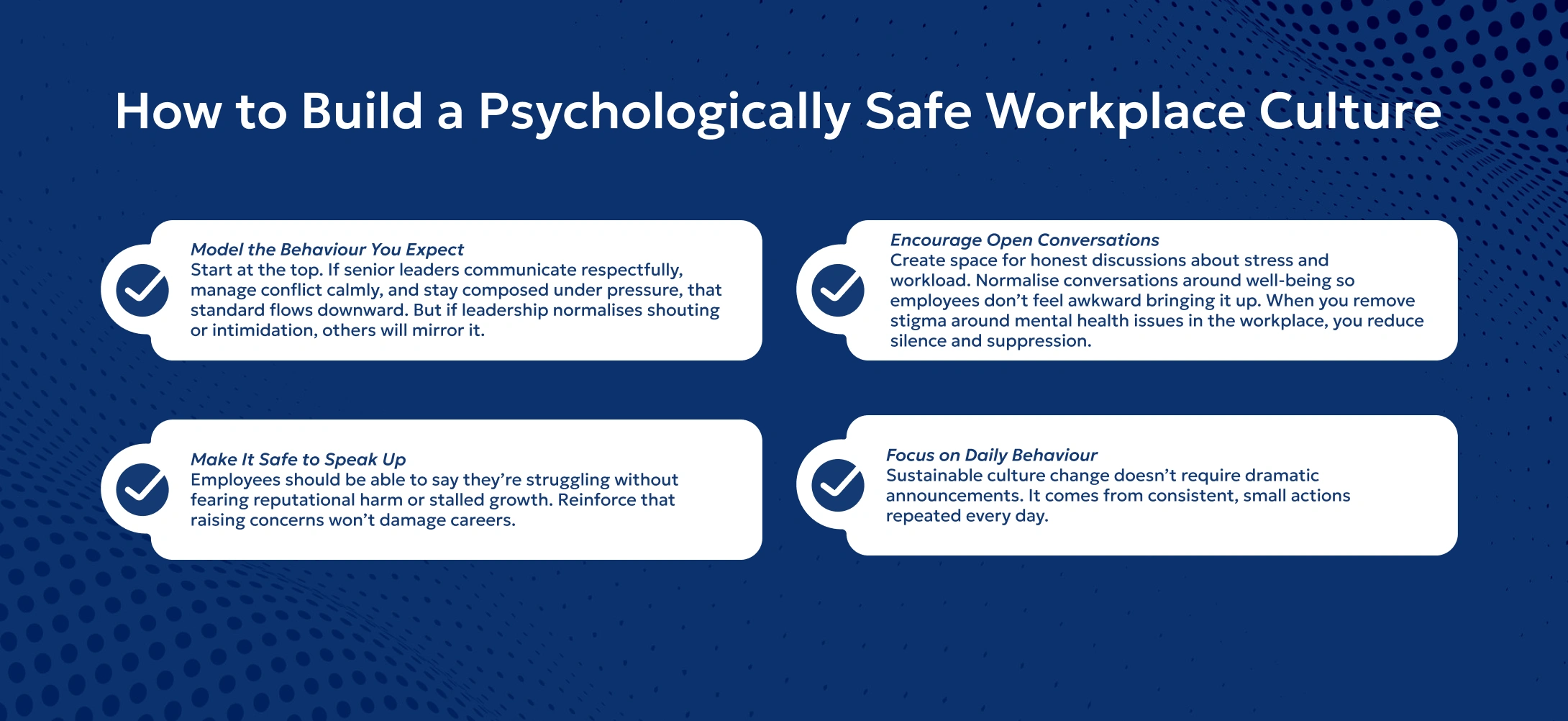
How to Build a Psychologically Safe Workplace Culture

Creating psychological safety isn’t about drafting another policy. It’s about shaping everyday behaviour, because culture is what your employees experience when leadership isn’t in the room.

1. Model the Behaviour You Expect

Start at the top. If senior leaders communicate respectfully, manage conflict calmly, and stay composed under pressure, that standard flows downward. But if leadership normalises shouting or intimidation, others will mirror it.

2. Encourage Open Conversations

Create space for honest discussions about stress and workload. Normalise conversations around well-being so employees don’t feel awkward bringing it up. When you remove stigma around mental health issues in the workplace, you reduce silence and suppression.

3. Make It Safe to Speak Up

Employees should be able to say they’re struggling without fearing reputational harm or stalled growth. Reinforce that raising concerns won’t damage careers.

4. Focus on Daily Behaviour

Sustainable culture change doesn’t require dramatic announcements. It comes from consistent, small actions repeated every day.
mental health in workplace
Let experts help you create a safe workspace

Real -World Case Study

Context:

Remember the case discussed in the introduction. Here’s what happened.

At an industrial workplace in India, a junior engineer alleged that his senior manager repeatedly humiliated and pressured him. Over time, his mental health reportedly deteriorated. He later died by suicide, leaving a note blaming his superior for sustained harassment. And his family subsequently filed a criminal complaint.

The Issue:

The key legal question was whether persistent workplace harassment could amount to abetment of suicide under Section 306 of the Indian Penal Code.
The court examined whether the following actions crossed the legal threshold:
  • Repeated verbal humiliation by a superior.
  • Creation of a hostile and emotionally distressing work environment.
  • Conduct that allegedly pushed the employee into severe mental breakdown.
The accused manager sought to quash the criminal case, arguing that workplace stress or disciplinary pressure alone doesn’t constitute abetment.

The Trigger:

The suicide note explicitly named the superior and described ongoing mental torture at work. Based on this and other evidence, the police filed a chargesheet for abetment of suicide. The matter reached higher courts when the accused challenged the prosecution.

The Impact:

The court refused to quash the proceedings at the preliminary stage. It observed that sustained mental harassment, if proven to have directly instigated the act, could attract criminal liability. The case was allowed to proceed to trial.

What You Learn:

Mental health in the workplace is not just an HR concern. If managerial conduct amounts to continuous humiliation or psychological abuse, it may expose individuals and organisations to criminal prosecution under Indian law.
mental health in workplace
Want to avoid legal consequences?

How Vishaal Consultancy Services Can Help You

At Vishaal Consultancy Services, we help you build legally compliant systems that address mental health in workplace practices with clarity and structure. We draft robust policies, disciplinary procedures, anti-harassment frameworks, and grievance mechanisms aligned with Indian labour laws.

We also support you with compliance audits, manager training, and investigation guidance so mental health at work is embedded into your processes, not just your intent.

Create a legally compliant workplace

Conclusion

Mental health in workplace environments is no longer a soft topic. It intersects with constitutional rights, labour compliance, productivity, and leadership accountability. Employers who ignore it risk losing trust, talent, and sometimes legal standing. Those who address it proactively build resilient teams and stable organisations.

If you are looking to strengthen your mental health in workplace compliance with practical, legally sound policies, Vishaal Consultancy Services can guide you in protecting both your people and your business. Reach out today.

FAQs

Yes, it can, if the behaviour includes repeated humiliation, threats, or constant mental pressure. Courts examine the pattern, intent, and impact on the employee. Clear policies, proper documentation, and respectful supervision help separate firm management from unlawful harassment.
Vishaal Consultancy Services can help you draft clear, legally sound policies, disciplinary procedures, and grievance frameworks aligned with Indian labour laws. We ensure your documentation is practical, defensible, and easy to implement, so you reduce legal risk while strengthening workplace culture.

Start with simple steps: define acceptable conduct, train managers on respectful communication, create safe reporting channels, and document actions properly. Consistency matters more than cost. Even small improvements can strengthen mental health in workplace culture and prevent disputes later.

See Related Blogs

Scroll to Top