

Table of Content
Have you ever wondered how women manage to work comfortably during their periods, especially when pain or discomfort hits hard?
It’s not something often talked about in offices, yet it affects thousands every month. The Karnataka government recognised this and recently introduced the Karnataka Menstrual Leave Policy 2025, aimed at giving women employees a structured way to take care of their health without worrying about work.
In this blog, we are going to talk about the Karnataka Menstrual Leave Policy, its key provisions, eligibility, why it matters, and how it is set to transform workplaces across the state.
A menstrual leave policy allows women to take paid time off during their menstrual cycle, acknowledging that some may experience severe discomfort or health issues. It is not just an extra day off; it is a recognition that workplaces should be supportive of women’s health.
By understanding the above, employers can create a more inclusive environment, and employees can feel valued and supported.

The Karnataka Menstrual Leave Policy 2025 is a pioneering step by the Karnataka state government. Under this policy, women employees in both the government and private sectors are entitled to one paid day off per month, totaling 12 days annually. This leave is separate from casual or sick leave, so it doesn’t reduce other entitlements.
The policy ensures that women can manage menstrual discomfort without stress or stigma. It is a significant move in India towards gender-sensitive workplaces and shows how legal frameworks can support health and productivity simultaneously.
The key provisions of the Karnataka Menstrual Leave Policy include:
This list makes it clear who can benefit, helping organisations communicate the policy effectively.
The Karnataka Menstrual Leave Policy is more than just giving female employees an extra day off. It recognises real challenges women face at work during their periods and helps create a workplace that truly cares. Here’s why it matters:
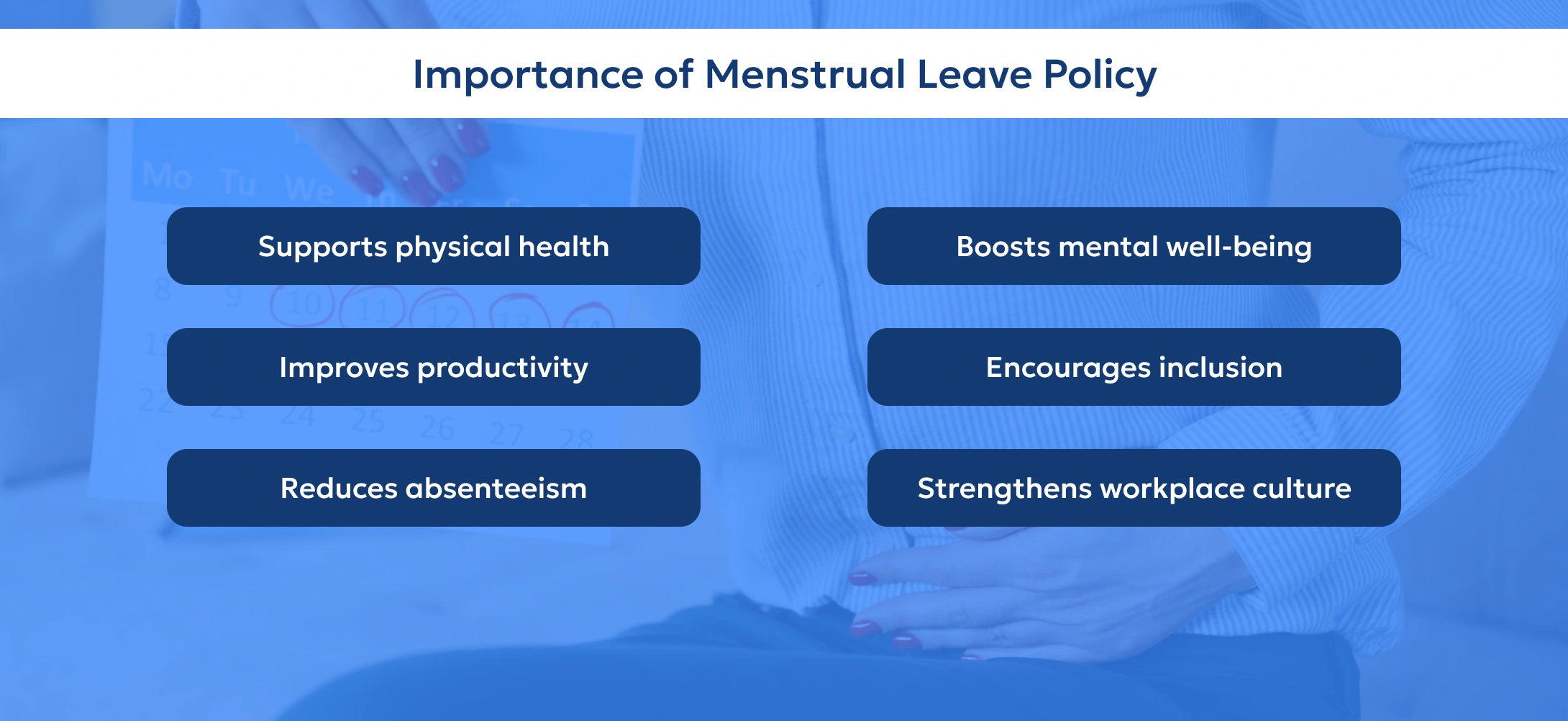
The menstrual leave in Karnataka allows women to request leave through standard company procedures. Ideally, no medical certificate is required, making it easy and stress-free. Employees can plan their work around this leave, and HR teams must ensure it is applied fairly.
When implemented well, the menstrual leave for women in Karnataka creates a culture of trust, normalises health conversations, and reduces absenteeism
Here’s a real example on menstrual leave that started a big change in India.
Incident:
In August 2020, Zomato became the first big Indian company to launch a menstrual leave policy. All women and transgender employees were allowed up to 10 days of paid period leave a year. The goal was simple — to support employees who experience pain or discomfort during their periods and to remove the shame often linked with it.
Challenges:
There were no legal issues, but Zomato did face some social challenges:
Outcome:
Implementing the Karnataka Menstrual Leave Policy doesn’t have to be overwhelming. Honestly, with a few simple steps, you can make a real difference for your female employees and even improve the overall workplace atmosphere.
The Karnataka Menstrual Leave Policy 2025 is a major step towards creating workplaces that care for women’s health. It recognises menstrual needs, encourages inclusion, and provides a structured way for women to manage their cycles without worry. The policy also sets a benchmark for other states and companies to follow.
If your organisation operates in Karnataka, now is the time to act. Vishaal Consultancy Services can help you implement the Karnataka menstrual leave policy effectively, ensuring compliance, awareness, and a supportive environment where your women employees truly feel valued.
All women employees in Karnataka, including government, private, IT, manufacturing, and garment sectors, are eligible. Full-time, part-time, and contract employees can avail leave, usually from the date of joining, depending on employer-specific HR rules.
Under the Karnataka Menstrual Leave Policy, women employees are entitled to one paid day off per month, totaling 12 days annually. This leave is separate from casual or sick leave, ensuring it doesn’t affect other entitlements
No, typically women employees do not need to provide a medical certificate to take menstrual leave. The policy encourages a simple, stigma-free process so employees can manage their health comfortably without unnecessary formalities.
See Related Blogs
BLOGS
Fill in your details to download our exclusive e-learning document.
Fill in your details to download our exclusive e-learning document.
Fill in your details to download our exclusive e-learning document.