

Vishaal Consultancy Services

Home / blogs / How to Enforce Dual Employment Laws in India

Are Your Employees Working Elsewhere? How to Enforce Dual Employment Laws in India

dual employment laws in India

Introduction

Remote work has made life easier for many, but it has also created a quiet HR challenge: employees taking up second jobs without informing their employers. A recent TeamLease report found that nearly 43% of Indian IT professionals admitted to working on side projects during or after work hours. This trend has left many companies concerned about productivity loss, data security, and divided attention.

A similar situation occurred in 2022 with a leading IT firm, which terminated around 300 employees for moonlighting. The move sparked nationwide debate and controversy, which we will discuss later in the blog.

In this post, we’ll break down dual employment laws in India, explain what dual employment means, how it differs from moonlighting, whether it is legal, what punishments exist, and how employers can handle such cases effectively.

What is Dual Employment?

Dual employment means an employee is working for more than one employer at the same time. It can be two full-time jobs or a mix of full-time and part-time work.

While this may seem harmless at first, dual employment can raise serious issues for companies such as conflict of interest, data misuse, or reduced productivity. Employers must define what dual employment means in their employment contracts and HR policies to avoid confusion as this clarity helps both sides know their boundaries.

Now, let us look at how dual employment differs from moonlighting, which is often misunderstood.

Dual Employment vs Moonlighting

These two terms are often mixed up, but there is a difference that matters to HR professionals and employers.
  • Dual Employment refers to having two active employment contracts at once, often with both employers unaware of each other.
  • Moonlighting usually means taking up freelance or side work after office hours, sometimes in unrelated industries.  
While moonlighting may not always be illegal, dual employment can be a breach of company policy or contract. The impact depends on whether the second job affects performance or violates confidentiality
To understand how to enforce the law, let us first look at what the legal framework says
dual employment laws in India

Laws Governing Dual Employment in India

Dual employment in India is governed by a mix of labour laws, state regulations, and employment contracts. There is no single national law that clearly bans or allows it for all employees.

Here are the main laws and provisions employers should know about:

Factories Act, 1948 (Section 60):

It prohibits factory workers from working in more than one factory on the same day. This prevents overwork and maintains safety standards.

Shops and Establishments Acts (State Laws):

These vary from state to state. For example, Tamil Nadu’s law allows dual employment under certain conditions, while Delhi and Karnataka restrict it. Employers should check the act applicable in their state.

Industrial Employment (Standing Orders) Act, 1946:

It empowers employers to define service conditions, including restrictions on outside work.

Employment Contracts:

Most private companies include a clause that restricts employees from taking another job without written consent.
Understanding these laws helps employers create policies that align with both state rules and their company’s operational needs.
Are your Employment Contracts legally compliant?

There are no concrete rules on dual employment in India. It’s neither completely illegal nor fully allowed. Its legality depends on the terms of the employment contract and the relevant laws mentioned above.

If your employment contract includes a clause prohibiting secondary employment, taking another job can be treated as misconduct. However, if an employee is engaged in freelance work unrelated to their primary job, and it does not violate any company rules, it may not count as dual employment in the strict legal sense.

For companies, the best way to handle this is by including a clear “outside work” or “dual employment” clause in every employment contract as this will give you a strong legal base to act fairly and confidently.

dual employment laws in India

Punishment for Dual Employment in India

There is no single nationwide punishment for dual employment, but the consequences depend on the nature of the job and company policy.
For employees, it can lead to:
  • Immediate termination from service 
  • Loss of pending salary or benefits 
  • Negative impact on future job opportunities 
For employers, acting without proper process can cause:
  • Legal challenges for wrongful termination 
  • Bad publicity and employee distrust
  • Compliance issues if the process lacks documentation 
So while dual employment laws in India allow employers to act, it is important to handle such cases fairly and legally. Let’s now look at where most employers go wrong.

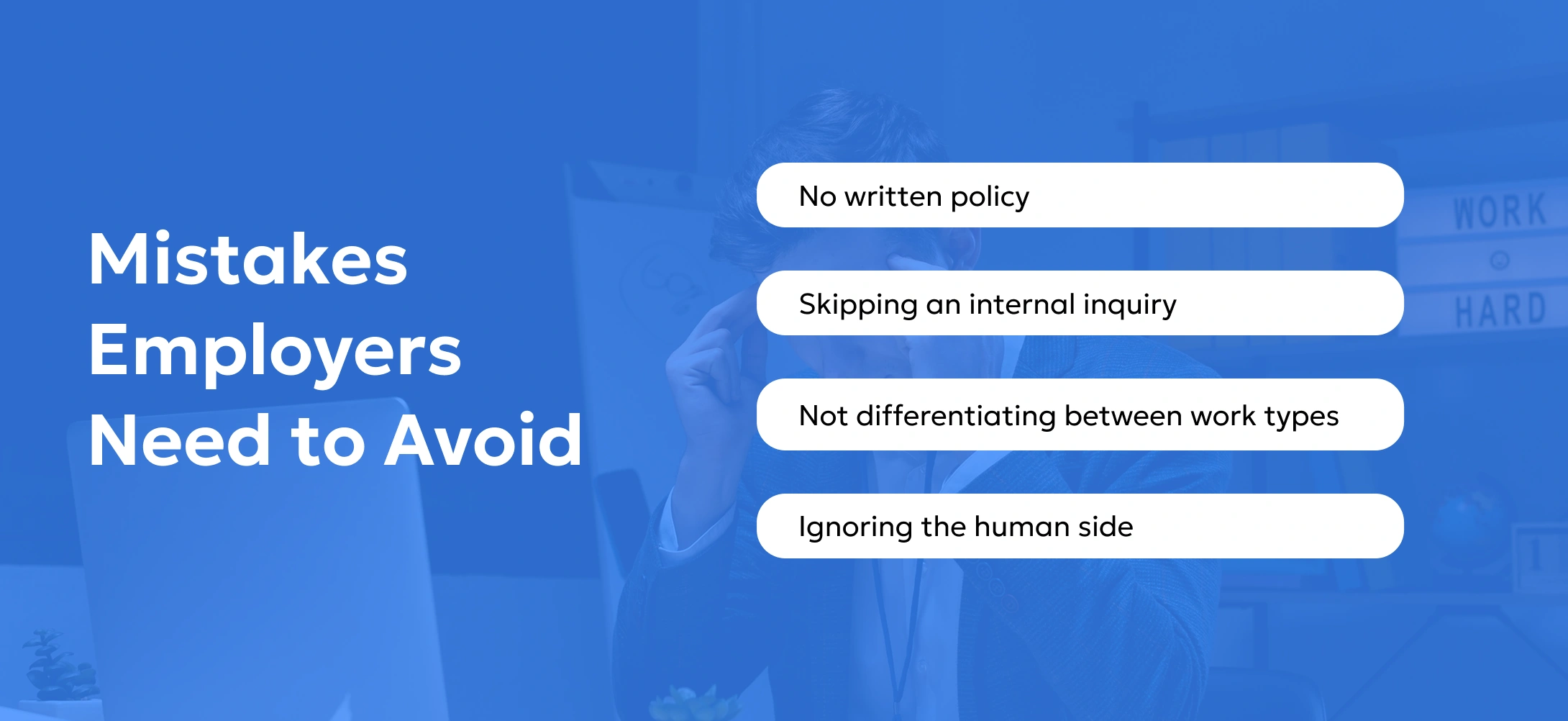
Mistakes Employers Need to Avoid

Even large companies can make mistakes when addressing dual employment cases. Some of the most common ones include:
  • No written policy:Without a proper clause, disciplinary action may not stand legally.
  • Skipping an internal inquiry: Every case should be investigated with evidence before taking action. 
  • Not differentiating between work types:Treating small freelance work the same as a second full-time job can create unnecessary conflict.
  • Ignoring the human side:Some employees take on side work due to financial pressure, not disloyalty.
Avoiding these mistakes helps you maintain fairness and trust, while still protecting your company’s interests.
dual employment laws in India
Don’t let HR errors cost your company!

Case Study: Dual Employment at Wipro (2022)

Context:

After the COVID-19 pandemic, many IT professionals began taking up additional remote jobs for extra income. In 2022, Wipro, one of India’s leading IT companies, discovered that around 300 employees were simultaneously working for competitor firms while on Wipro’s payroll. The company viewed this as a breach of integrity and confidentiality and terminated their employment.

The Issue:

Wipro’s action raised several legal, ethical, and HR-related questions, including:
  • Contract ambiguity:Most employment contracts did not clearly define or prohibit secondary employment.
  • Lack of due process:Employees claimed they were terminated without a proper inquiry or opportunity to explain their side. 
  • Industry debate:The incident triggered a national discussion on whether moonlighting should be treated as misconduct in the post-pandemic work era.
  • Employee morale:Many workers felt uncertain and anxious, fearing sudden termination even for freelance or non-competing work.

Outcome:

While no single court case was filed publicly by the affected employees, the incident became a legal and ethical benchmark. The Ministry of Labour clarified that dual employment is not automatically illegal unless the employment contract prohibits it. Several labour law experts also highlighted that termination without inquiry or proof of conflict could be challenged under Indian labour law if the employee was in the “workman” category.

KeyTakeways:

Companies should clearly mention dual employment rules in contracts and always follow fair, transparent procedures before taking action. It’s important to listen to employees, allow disclosure, and handle such issues with care to protect both the company’s reputation and employee trust.

Best HR Practices to Manage Dual Employment Fairly

  • Employers must clearly define dual employment and conflict of interest in their contracts and HR policies.
  • Disciplinary actions should always follow transparent inquiry procedures and allow employees to explain their side.
  • Companies should differentiate between competitive moonlighting (which risks data/confidentiality) and harmless side gigs.
  • In the flexible, remote-work era, blanket bans can harm morale and reputation; well-defined disclosure and approval systems are more effective.
  • Proper documentation, fairness, and communication can protect both employer and employee from legal and reputational risk.
If an employer is unsure how to handle a potential employment contract breach, having clear HR policies and procedures can guide them and protect the company.

How Vishaal Consultancy Services Can Help

Dual employment issues require careful handling, especially when contracts, state laws, and HR processes overlap.
At Vishaal Consultancy Services, we help organisations:
  • Draft clear and legally compliant employment contracts
  • Develop HR policies that address outside work and conflicts of interest
  • Educate HR and management teams on enforcing dual employment laws in India
Our goal is to help companies stay compliant while maintaining positive employee relationships.
Reach out today to build a compliant and confident workplace.

Conclusion

Dual employment is becoming increasingly common as work becomes more flexible. However, without the right policies, it can quickly lead to legal disputes and employee mistrust. Understanding what dual employment means, the laws that govern it, and how to apply them fairly can save your organisation from future risks.

If your company is struggling with unclear HR policies or cases of employees working elsewhere, Vishaal Consultancy Services can help. Our virtual HR experts ensure your contracts, policies, and procedures are compliant and fair, protecting your business and your people at the same time.

FAQs

Dual employment means when an employee works for two employers at the same time, often without disclosure. While on the other hand, moonlighting usually refers to freelance or part-time work outside regular hours for extra income or to follow passion.

Dual employment is not completely illegal, nor fully allowed. Its legality depends on the employment contract and relevant labour laws. If a contract prohibits outside work, taking another job can be treated as misconduct by the employer.

Consequences vary depending on company policy and contract terms. Employees may face termination, loss of benefits, or damage to future opportunities. Employers acting unfairly can face legal challenges, reputational harm, and compliance issues.

See Related Blogs

Scroll to Top