

Table of Content
Have you ever hired someone who looked perfect on paper but turned out to be the wrong fit?
Most organisations have. And when that happens, it’s rarely just about the candidate. It usually points back to the process. Maybe the role was not clearly defined. Maybe interviews were rushed or maybe documentation was skipped because everyone was “too busy.”
Hiring decisions shape teams, culture, and long-term stability. Yet many businesses still treat staffing like a routine HR activity. In reality, the functions of staffing sit at the heart of organisational control and growth. When done properly, they prevent confusion, reduce disputes, and create clarity for everyone involved.
Let us look at what this really means in practice
Staffing is often misunderstood as recruitment alone. But recruitment is only one part of the picture.
The functions of staffing include identifying manpower needs, attracting talent, selecting the right people, placing them properly, supporting their growth, and reviewing their performance over time. It is a continuous cycle, not a one-time action.
In management terms, this is known as the function of management staffing, because it connects business goals with human capability. Without the right people in the right roles, even the best strategy fails quietly.
And this is where leadership must pay attention.

Talk to our experts and align your staffing strategy with business goals today
If you are responsible for hiring, staffing is not just an HR activity sitting in the background. It affects your team’s output, your compliance position, and sometimes even your personal accountability as a decision maker. Every hiring choice you approve has a long tail. That is why the functions of staffing must be handled with structure, clarity, and proper records.
Let us walk through what this really means for you in practical terms.
Before you approve a job posting, pause for a moment and ask yourself why this role is needed. Is there a real skill gap? Is the workload increasing? Or is someone leaving and you are replacing them without reviewing the structure?
Workforce planning is where you slow down and think through the need. You might realise that an existing employee can be upskilled instead, or that the role needs to be redesigned. When planning is skipped, hiring becomes reactive. And reactive hiring usually increases cost or lowers quality.
If you plan properly at the start, recruitment becomes sharper and far more focused.
Recruitment is often the first formal interaction a candidate has with your organisation. The way you design this stage says a lot about how you function internally.
When job descriptions are clear and eligibility criteria are defined in advance, the process feels fair. But when criteria keep changing or referrals quietly replace structured evaluation, credibility drops. Even if intentions are good, the process can appear biased.
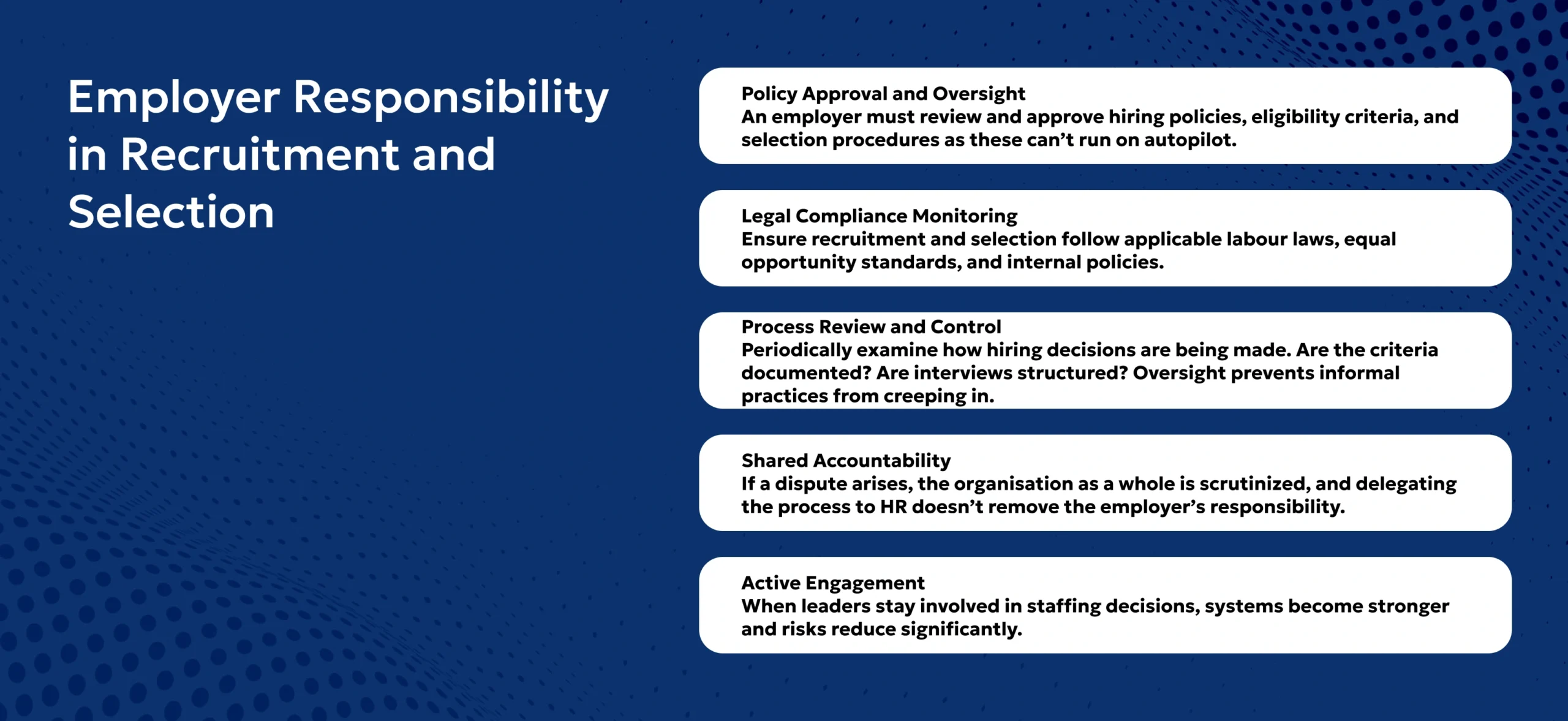
As a decision maker, you should ensure that recruitment is documented and consistent. It protects your organisation’s reputation and reduces the risk of disputes later.
This is where accountability becomes real. Selection decisions cannot depend only on instinct or memory. You may have strong judgment, but documentation is what supports that judgment.
Using predefined interview questions, keeping evaluation notes, and recording reasons for final decisions gives structure to the process. If a rejected candidate questions fairness or alleges discrimination, these records matter.
The goal is not to create unnecessary paperwork. It is to make sure your hiring decisions can stand scrutiny if required.
Many organisations relax once the offer letter is accepted. But this stage is critical.
As an employer, you must ensure that appointment letters clearly define compensation, probation terms, notice period, and statutory coverage. Ambiguity at this stage often leads to disputes during confirmation, appraisal, or exit.
Onboarding should also clarify reporting structures, policies, and expectations. When employees understand their role from day one, misunderstandings reduce significantly.

Staffing does not end once someone joins. It continues through development and evaluation.
If employees are not trained properly, performance issues arise and corrective action becomes difficult to justify. Regular performance reviews, documented feedback, and clear goal setting make the process fair and defensible.
You also need to think about succession. If a key employee resigns tomorrow, is there someone ready to step in? Planning ahead avoids disruption and panic hiring.
When you manage the functions of staffing with clarity and discipline, you reduce risk and build stability. It strengthens your decisions, protects the organisation, and reflects responsible leadership.
Context:
At a leading national social sciences institution, certain administrative appointments made around 2020 were challenged over alleged irregularities in the recruitment and selection process. Concerns were raised about whether the hiring exercise followed approved institutional norms and whether the selection criteria were applied fairly and consistently.
The Issue:
The Trigger:
The Impact:
What You Learn:
Building a reliable staffing framework needs both legal clarity and practical systems. Vishaal Consultancy Services supports employers and HR teams in reviewing recruitment processes, improving documentation, and aligning hiring practices with labour law requirements.
We help with policy drafting, compliance checks, and process audits so your staffing decisions remain structured and defensible as your organisation grows.
Staffing shapes your organisation more than you realise. It affects culture, compliance, performance, and risk. When the functions of staffing are managed with clarity and proper documentation, you build stability and reduce the chances of disputes or legal scrutiny later.
At Vishaal Consultancy Services, we help you strengthen compliance at every stage of recruitment and selection. From policy drafting to process audits and documentation review, our team ensures your staffing framework aligns with labour laws.
Start with workforce planning. If you’re not clear about why you’re hiring, you may fill the wrong role. Then focus on structured recruitment and documented selection. These stages directly impact compliance, fairness, and your ability to justify decisions if questioned.
You don’t need to attend every interview, but you must approve policies, review selection criteria, and ensure labour law compliance. If a dispute arises, responsibility does not stop with HR. Vishaal Consultancy Services often supports employers in reviewing these systems to make sure the function of management staffing remains legally sound and properly documented.
Keep written job descriptions, approved eligibility criteria, structured interview evaluation sheets, and clear records explaining selection or rejection decisions. Appointment letters must also define terms precisely. These documents protect you if a candidate challenges transparency or alleges unfair hiring practices.
See Related Blogs
BLOGS
Fill in your details to download our exclusive e-learning document.
Fill in your details to download our exclusive e-learning document.
Fill in your details to download our exclusive e-learning document.