

Table of Content
Payroll problems start small and grow quietly. Old formulas, outdated settings, and assumptions that once worked in your payroll can go unnoticed for years. On the surface, everything may seem fine. Your salaries are processed, PF contributions are deducted, and reports are generated. But with the new provident fund rules, these hidden gaps can quickly turn into compliance risks for you and your organisation.
If your payroll system is still running on older PF logic, some of its assumptions may no longer hold. That mismatch can cause errors, delays, or even penalties if you don’t address it. Understanding how these rules affect your payroll and taking steps to update your systems is essential to stay compliant and avoid surprises.
Updating payroll starts with knowing exactly what the new provident fund rules mean for your business. These rules clarify how PF wages are calculated and which salary components must be included, aiming to bring consistency and fairness across all employees.
The legal framework comes from the Employees’ Provident Funds and Miscellaneous Provisions Act, 1952, which gives the EPFO authority to issue notifications and circulars that are binding for all employers. Courts have repeatedly held that employers are responsible for accurate PF reporting and timely contributions, making payroll compliance a legal obligation, not just a process task
Key areas to focus on include:
PF wage definitions have become stricter. Some allowances that are part of an employee’s regular salary may now need to be included in PF calculations. This affects both employee deductions and your contributions, and it can change the total cost of employment more than you might expect.
Many payroll systems still work on old assumptions, which means the same errors can keep popping up every month. Quick manual fixes might get you through once or twice, but they don’t solve the problem in the long run.
To stay compliant, you should take a closer look at your payroll system:
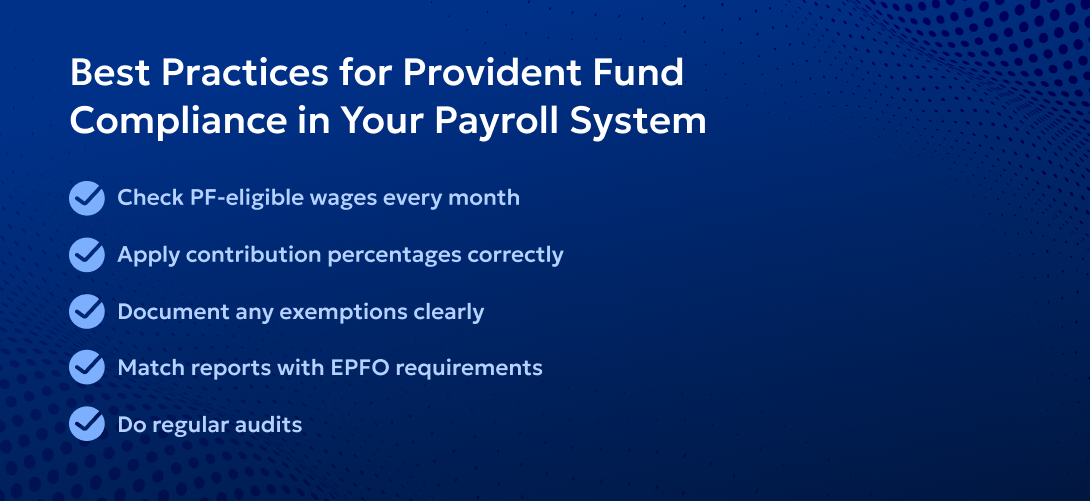
Follow these best practices:
Payroll affects your employees’ take-home salary and future benefits. With the new provident fund rules, some of your employees may see higher PF deductions, so it’s important to explain the changes clearly. Make sure you update salary slips and HR policies to avoid confusion.
Your responsibility doesn’t end when someone leaves. PF withdrawals rely on the data you provide, and mistakes in wages, contributions, or exit dates can delay payments and frustrate your former employees.
By keeping your employees informed and maintaining accurate payroll records, you make payroll management smoother for yourself and your team, and you reduce follow-ups and compliance issues.
As an employer, you need to make sure your payroll keeps pace with changing regulations. The EPF new rules 2025 focus on digitisation, accurate monitoring, and stricter enforcement, so your payroll system should be flexible, well-documented, and managed by your trained staff.
Regularly reviewing your payroll and maintaining clear audit trails helps you avoid last-minute fixes and gives you more control over compliance. Preparing in advance builds confidence and stability, especially during regulatory changes.
If you are unsure about updating your payroll or want to ensure full compliance, seeking professional guidance can make the process smoother. Vishaal Consultancy Services can help you review your systems, implement changes, and stay aligned with the latest rules.

Provident fund compliance involves both legal requirements and practical execution, hence managing it alone can be challenging. We help you align your payroll systems with the new provident fund rules by reviewing structures, identifying gaps, and implementing corrections efficiently.
We also support documentation, employee communication, and audit readiness, so you can focus on running your business while knowing that payroll and PF compliance are handled accurately and smoothly.
Payroll compliance depends on how well your systems are set up and maintained. The new provident fund rules impact salary calculations, reporting, and employee trust, and they need more than quick fixes. By updating your payroll systems early, you can avoid stress and ensure smoother operations.
If you want dependable support, Vishaal Consultancy Services can help you align your systems, address compliance gaps, and manage payroll accurately. With our experts, you can stay prepared, prevent future issues, and focus on running your business while payroll and PF compliance remain fully under control
The new provident fund rules change how PF wages are defined and what salary components must be included. For your business, this means revisiting payroll settings to calculate contributions correctly, prevent errors, and make sure employee deductions and employer contributions are fully compliant.
With the updated pf withdraw rules, employees can access their PF funds more flexibly, but only if your payroll records are accurate. Ensuring data on wages, contributions, and exit dates are accurate; guarantees that withdrawals are processed on time, reducing follow-ups and protecting your credibility as an employer.
See Related Blogs
Fill in your details to download our New Labour Code PDF.
Fill in your details to download our exclusive e-learning document.
Fill in your details to download our exclusive e-learning document.
Fill in your details to download our exclusive e-learning document.