Vishaal Consultancy Services

Home / blogs / Full and Final Settlement Rules for Resignation

Full and Final Settlement Rules for Resignation and Termination Under New Labour Codes

full and final settlement rules

Introduction

Ever wondered what happens when an employee resigns or is terminated, but their pending dues are delayed? This situation can frustrate employees, harm trust, and even create legal risks for your organization.

Take, for example, a consultant who completed a major overseas project but didn’t receive his salary, allowances, or relieving letters on time. The delay in his full and final settlement eventually led to legal action against the employer, highlighting how crucial it is for employers to follow proper procedures.

In this guide, you’ll learn what a full and final settlement is, the components it includes, the rules under the new labour codes, and practical steps for employers to ensure settlements are handled efficiently and compliantly.

What Is Full and Final Settlement?

A full and final settlement is the total amount an employee is entitled to receive when leaving an organization. This typically includes the last month’s salary, leave encashment, bonuses, reimbursements, and any statutory benefits.

It goes beyond exit formalities like relieving letters. It also covers financial and statutory obligations that must be settled before the employee’s exit is legally complete. Following proper full and final settlement rules ensures the employee leaves with all dues cleared and provides closure for both parties. For employers, understanding these rules is crucial to avoid delays, disputes, or legal complications.

The next section will break down the key components that make up a full and final settlement. 

Components of a Full and Final Settlement

A proper full and final settlement typically includes the following components:
  • Salary for Days Worked: Payment for all days up to the employee’s last working day. 
  • Leave Encashment: Compensation for any unused earned leaves
  • Statutory Benefits: Gratuity, provident fund, or other benefits if the employee is eligible. 
  • Bonuses and Incentives: Pending performance bonuses or incentives
  • Reimbursements: Any business-related expenses incurred by the employee
  • Deductions: Applicable deductions such as taxes, loans, or notice period adjustments.
    Understanding these components helps employers calculate settlements accurately, ensures transparency, and reduces the risk of disputes, making the exit process smooth and compliant with full and final settlement rules
Understanding these components helps employers calculate settlements accurately, ensures transparency, and reduces the risk of disputes, making the exit process smooth and compliant with full and final settlement rules.

New Full and Final Settlement Rules Under the Labour Codes

India’s new labour codes, effective from November 21, 2025, merged 29 older laws into a unified framework covering wages, social security, industrial relations, and working conditions. One important change is how employers must handle employee exit payments.

Under these codes, employers are required to complete full and final settlement rules within 2 working days of an employee’s last working day. This applies to resignations, terminations, dismissals, retrenchments, or closure of an establishment. Previously, settlements often took 30 – 45 days or more.

To comply, employers need to calculate all dues, approvals, and documentation in advance. Following these full and final settlement rules ensures smooth exits, prevents disputes, and keeps your organization legally safe.

full and final settlement rules

What Is a Full & Final Settlement Letter and Why It Matters

A full and final settlement letter is an official document confirming that all dues have been paid, and the employee’s account with the organization is fully settled.

It protects the company from future claims or confusion. Issuing this letter is a key part of following full and final settlement rules. When combined with payslips, relieving letters, and experience certificates, it ensures transparency, professionalism, and legal protection in case of any disputes.

Step-by-Step Full and Final Settlement Process Employers Should Follow

Handling full and final settlements can feel tricky, but a clear process makes it easier and prevents mistakes. Here’s how you can manage it smoothly:
  • Start Exit Formalities Early: Begin the exit process before the employee’s last working day. This ensures that everyone knows the steps, and as a result, confusion or repeated follow-ups are avoided. 
  • Calculate All Dues Accurately:  Include salary, leave encashment, pending bonuses, reimbursements, and statutory benefits. Missing even a small component can lead to complaints later. 
  • Prepare the Full & Final Settlement Letter: Draft a clear, legally sound letter confirming all dues are settled, and share it with payslips so the employee has proof of the settlement. 
  • Process Payment Promptly: Transfer the settlement within 2 working days under the labour codes to prevent frustration or potential legal issues. 
  • Issue Supporting Documents: Provide the relieving letter and experience certificate along with the settlement letter. This means that the exit formalities are completed professionally and leave a positive impression on the employee
  • Maintain Records:  Keep proper documentation of payments, approvals, and letters for audits, compliance checks, or future reference. 
Following these steps not only keeps you compliant with full and final settlement rules, but also saves your HR team from repeated follow-ups, reduces disputes, and helps employees exit on a positive note.
Need expert guidance?

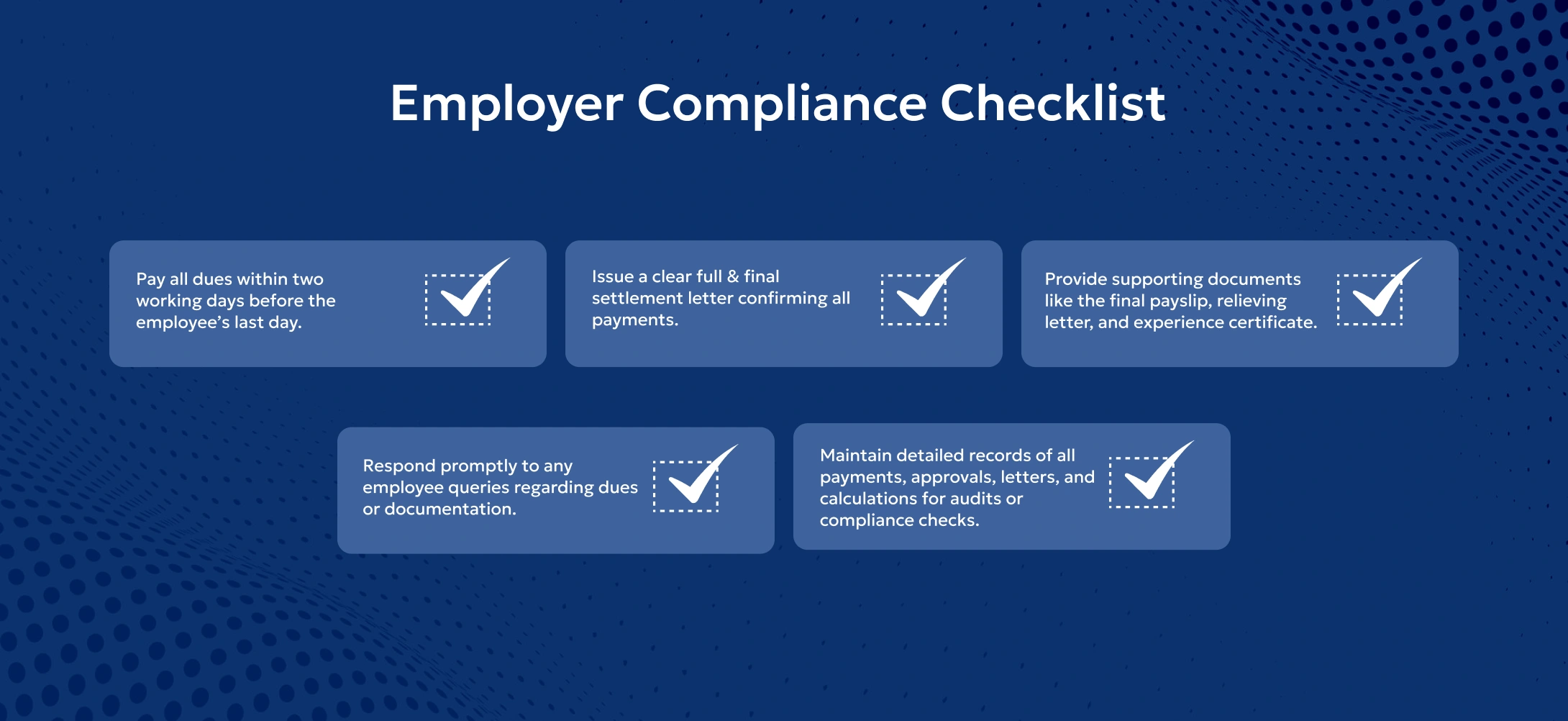
Employer Compliance Checklist

To make sure the full and final settlement process runs smoothly and nothing is overlooked, HRs can follow a simple, structured checklist. This ensures compliance, prevents disputes, and makes managing multiple exits much easier.
  • Pay all dues within two working days before the employee’s last day.
  • Issue a clear full & final settlement letter confirming all payments.
  • Provide supporting documents like the final payslip, relieving letter, and experience certificate.
  • Respond promptly to any employee queries regarding dues or documentation.
  • Maintain detailed records of all payments, approvals, letters, and calculations for audits or compliance checks.
Following this checklist ensures adherence to full and final settlement rules, reduces errors or delays, and helps HR teams manage exits efficiently.
full and final settlement rules

Case Study

Context:

A consultant working for an IT services company resigned after completing an overseas project. Despite repeated requests, the employer delayed his full and final settlement, including pending salary, allowances, and did not provide relieving or experience letters, causing financial and professional difficulties.

The Issue:

The dispute centered on whether the employer could withhold legally owed payments and exit documents. The company’s actions included:
  • Failing to release pending salary and allowances on time.
  • Refusing to provide relieving and experience letters necessary for future employment.
  • Ignoring repeated formal requests from the employee.

The Trigger:

The employee approached the Delhi Civil Court, arguing that withholding settlement dues and essential documents was unfair, unlawful, and harmed his career prospects.

The Impact:

The court ruled in favor of the employee, ordering the employer to pay ₹3 lakh plus 6% annual interest and release all pending documents. The decision highlighted that delaying full and final settlements can result in serious legal and financial consequences.

What You Learn:

A full and final settlement is a legal right of the employee. Employers must process dues and exit documentation promptly. Failure to do so can lead to litigation, interest penalties, and damage to the company’s reputation.
Want to avoid legal trouble?

How Vishaal Consultancy Services Can Help You

Handling full and final settlements can be tricky, and any mistakes can lead to disputes or penalties. That’s why expert guidance is essential. At Vishaal Consultancy Services, we as labour law compliance experts, help businesses by:
  • Ensuring full and final settlement as per labour law, covering all dues and statutory contributions.
  • Drafting clear, legally sound full & final settlement letters for both employer and employee.
  • Following full and final settlement rules to prevent delays or penalties.
  • Managing the process efficiently so you can focus on business growth.
full and final settlement rules
Book your free expert consultation now!

Conclusion

Following the full and final settlement rules ensures a smooth exit process for employees while keeping your organization compliant. At Vishaal Consultancy Services, we focus on proper payments, documentation, and procedures to maintain trust and professionalism.

We help businesses handle settlements efficiently and accurately. With our expertise, you can issue legally sound full & final settlement letters, clear all dues on time, and avoid disputes, so you can focus on managing and growing your business confidently. Book your free compliance call today!

FAQs

Yes, deductions like notice period adjustments, pending loans, or advances can be applied, but they must be clearly communicated to the employee and also documented. Transparent calculation ensures compliance with full and final settlement rules and prevents disputes or legal challenges.
Under the new labour codes, settlements should be completed within 2 working days. Any delay beyond this is considered non-compliance, and employees can legally request interest on delayed payments and even approach courts if necessary.

HR should provide the full & final settlement letter, final payslip, relieving letter, and experience certificate. Providing these documents together ensures transparency, protects the organization legally, and leaves the employee with a professional exit experience.

See Related Blogs

Scroll to Top