

Table of Content
Is the idea of employees working only four days a week practical for Indian businesses, or does it sound good only in theory?
For many HR leaders and business owners, the discussion around a shorter work week brings mixed feelings. On one hand, employee burnout is real, attrition is rising, and expectations around work-life balance are changing fast. On the other hand, the 4 day work week in India raises concerns around productivity, compliance, and business continuity.
That tension is exactly where most organisations feel stuck. The model looks progressive, but the risks feel unclear. Understanding what a 4 day work week really means in the Indian context, and how employers can manage its challenges, is the first step toward making an informed decision.
The idea of a four-day work week can mean very different things depending on how hours, output, and accountability are structured. For Indian employers, clarity on these models is critical before assessing feasibility, compliance impact, or business risk.
So, let’s take a look at how 4 day work week looks like.
A four-day work week changes how the work week is planned, not what employees are expected to do. People work fewer days, but their tasks, targets, and responsibilities stay the same. In some workplaces, regular weekly hours are spread across four longer days. In others, total working hours are reduced, and work is measured by what gets done, not by time spent at a desk.
In India, the 4 day work week is still new. Labour laws, business needs, and work culture are different, so employers need to understand the structure clearly before moving ahead.
While the idea sounds simple, putting a four-day work week into practice in India comes with its own set of challenges.

A four-day work week sounds good, but making it work in India isn’t that easy. Employers have to handle legal rules, manage day-to-day operations, and meet employee expectations while keeping everything running smoothly. These are the main challenges employers usually face:
Legal compliance is usually the first hurdle. Indian labour laws set limits on daily and weekly working hours, overtime, and rest periods, so squeezing work into four days isn’t always simple. For factories, shops, and other establishments, going beyond daily hour limits can trigger overtime pay or even penalties, which makes many employers worry that a 4 day work week in India could actually increase legal risks instead of easing the workload.
Without proper guidance, even well-intended policies can lead to audits, disputes, or notices, and once compliance risks are on the table, decision-making tends to slow down. Employers need clear legal advice and careful planning before attempting to implement a shorter work week.
Another big challenge is keeping work running smoothly. In industries like manufacturing, healthcare, retail, logistics, and customer support, work can’t just stop for a day, and even office teams can fall behind if schedules aren’t planned well.
HR teams have to plan shifts, coverage, and availability carefully when trying a 4 day work week in India. If staffing isn’t balanced or schedules don’t match, projects can get delayed, clients may be affected, and teams can get frustrated.
What do you think happens when employees have the same amount of work but fewer days to finish it? The workload often gets packed into shorter periods, which can make each day feel longer and more exhausting.
If tasks aren’t planned properly, employees can get stressed, rushed, and tired, and their productivity may actually drop. The problem becomes bigger when managers still judge performance by hours worked instead of results. In that case, a 4 day work week in India can quietly increase pressure, lower motivation, and leave teams feeling burned out without anyone noticing.
Keeping clients happy doesn’t stop just because your team works fewer days. Most customers still expect quick responses, consistent service, and support on five or six days of the week. This makes balancing client needs with a shorter schedule tricky for employers.
For client-facing teams, missed calls, delayed replies, or less overlap with client hours can hurt trust. Once relationships are strained, it takes time to fix them. That’s why many employers hesitate to adopt a 4 day work week in India, especially in sectors where responsiveness is key.
Even with the right systems and schedules, mindset matters just as much. Indian work culture often values long hours, visible effort, and being present at the office, which can make a shorter work week feel unusual or risky.
Managers may struggle to trust that work will get done in fewer days, and employees might worry about expectations, performance reviews, or job security. Without the right cultural readiness, a 4 day work week in India can feel forced instead of empowering, and changing attitudes takes time.
Facing these challenges doesn’t mean a 4 day work week can’t work. With proper planning, clear policies, and the right guidance, employers can reduce risks and keep operations smooth. Here’s how employers can overcome these challenges.
Start by reviewing labour laws that apply to your industry, location, and workforce before planning a four-day week. Set clear policies for working hours, rest periods, and overtime, and make sure everything is properly documented. And, regular compliance checks will help you avoid fines or disputes.
For organisations exploring a 4 day work week in India, consulting labour law experts keeps the plan compliant and sustainable. When rules are clear, both management and employees can adopt the schedule with confidence.
Making a four-day week work needs a flexible approach. Instead of giving everyone the same day off, many companies use staggered weekly offs, so work keeps moving. Using shift rotations, cross-trained teams, and role-based schedules also helps, and technology can make planning a lot easier.
It usually helps to start small. Try the four-day week with one department first and see how it goes before rolling it out to everyone. Gradual changes give teams time to adjust and keep work running smoothly without creating chaos.
Productivity works best when work is redesigned, not just squeezed into fewer days. Employers should focus on outcomes, set clear priorities, and give realistic deadlines. Reducing unnecessary meetings, clarifying responsibilities, and encouraging focused work blocks helps teams adjust more easily.
When performance is measured by results, a 4 day work week in India becomes about working smarter, not longer. Efficiency improves when pressure is managed well, helping employees stay motivated without feeling burned out.
Keeping clients happy takes clear communication. Let them know when your team is available, how fast they can expect a response, and what support is in place. Many companies handle this by rotating teams or having dedicated staff for client coverage, and automation can take care of routine questions.
With some planning, client experience doesn’t have to take a hit. In fact, being upfront about schedules often makes clients feel more confident and builds stronger, smoother relationships over time.
Change works best when leaders set the example. Training managers to focus on results rather than just hours worked helps shift the mindset, and sharing data from pilot programs can build trust across the organisation. Listening to employee feedback also strengthens support and confidence in the new model.
Over time, a 4 day work week in India stops feeling risky and becomes a clear, structured choice. Culture takes time to change, but with consistent effort and leadership support, teams gradually embrace new ways of working.

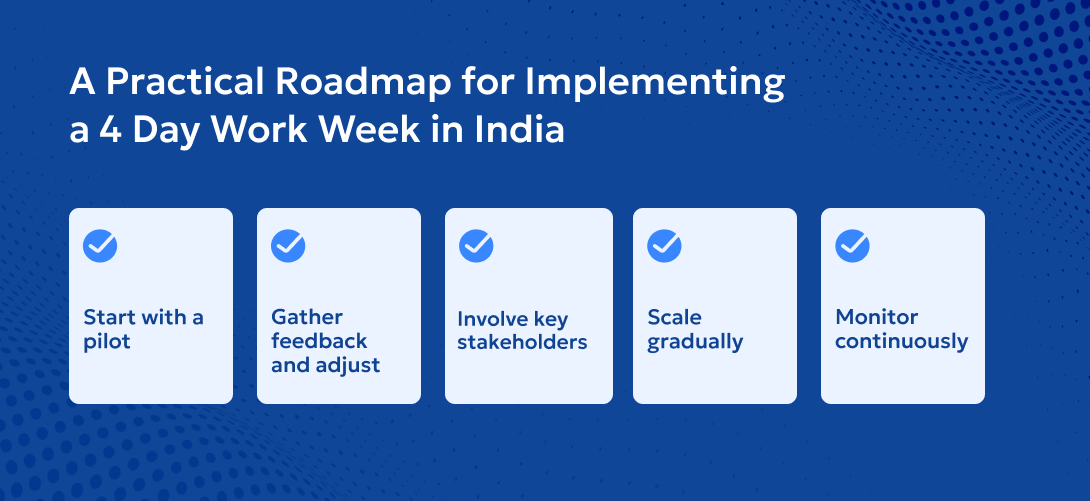
The move toward a shorter work week is already influencing how organisations think about productivity and employee expectations. For Indian employers, the 4 day work week in India is not just a policy change. It requires careful alignment with labour laws, business operations, and workplace culture to work effectively.
If your organisation is considering this shift, expert guidance is essential. Vishaal Consultancy Services helps employers design compliant, people-first work models aligned with Indian labour laws. With the right framework, a four-day work model can support business goals and workforce stability. Reach out to us, today!
See Related Blogs
Fill in your details to download our New Labour Code PDF.
Fill in your details to download our exclusive e-learning document.
Fill in your details to download our exclusive e-learning document.
Fill in your details to download our exclusive e-learning document.