

Table of Content
Managing contract labour can feel like walking on a tightrope. You want the work to be done efficiently, but even a small compliance mistake can throw you into financial and legal troubles. The Contract Labour Regulation and Abolition Act 1970 is designed to protect workers and ensure employers follow clear rules.
Imagine depending on a contractor to pay your workers, only to discover later that wages were delayed or benefits weren’t given. Suddenly, your business is in court, and your reputation takes a hit. Scary, right?
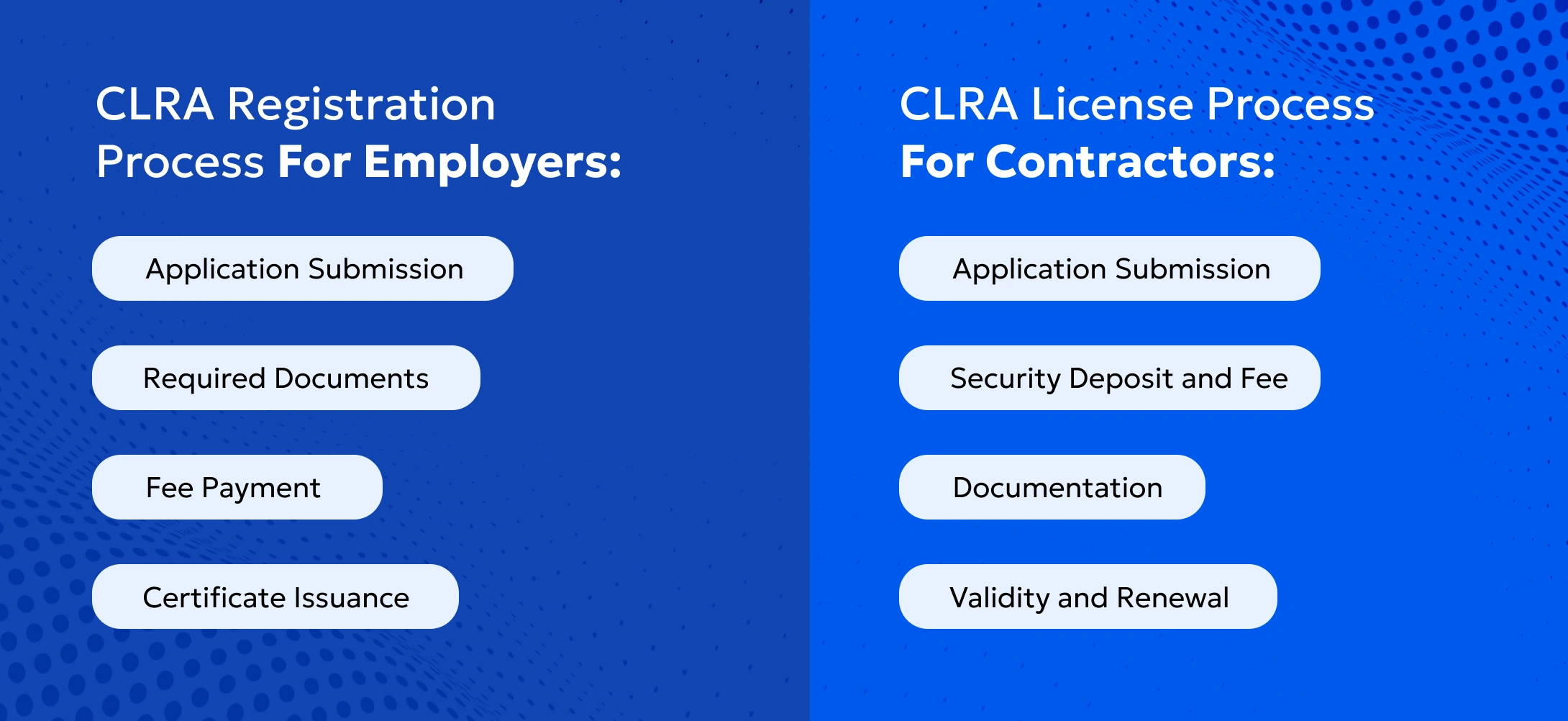
That’s why we’ve created this blog for employers, HR managers, and business owners who want to stay compliant. We’ll guide you through CLRA registration, CLRA license applicability, the registration and license process, and practical tips so you can protect your business and manage your workforce smoothly.
Before diving into processes, let’s see why understanding the law matters for your business and workforce.
Employers cannot leave compliance entirely to contractors – it doesn’t work that way. Because when there’s non-compliance, it can result in penalties, unpaid wages, and legal cases on the employer. That’s why understanding the Contract Labour Regulation and Abolition Act 1970 helps you stay proactive, protecting both your business and workers.
Next, let us look at registration and licensing, the first steps in CLRA compliance.

CLRA registration is the official recognition that a principal employer is following the Contract Labour Regulation and Abolition Act 1970. It is required for establishments hiring 20 or more contract workers.
Here’s Why CLRA Registration Matters:
Incident:
Violations:
Outcome:
The Delhi High Court ruled that the government department, as the principal employer, had to pay the workers their wages. The court made it clear that if a contractor fails, the employer cannot walk away. Payments must be made to workers first, and the employer can recover the money from the contractor later.
Mistakes like these create financial risk, damage trust, and disrupt work. They also show how contract labour issues can grow into costly disputes. Employers must follow CLRA rules carefully and keep compliance watertight. With the right guidance from experts like Vishaal Consultancy Services, you can avoid such risks and ensure your workforce is managed lawfully, fairly, and smoothly.
Managing the Contract Labour Regulation and Abolition Act 1970 can be challenging, but expert guidance simplifies it. Vishaal Consultancy Services helps employers like you stay compliant and reduce legal risk.
We support businesses in the following ways:

Managing contract labour responsibly is essential for protecting your business and employees. Proper CLRA registration, licensing, and following compliance steps safeguard against disputes, unpaid wages, and penalties. Employers who stay proactive save time, money, and stress.
Partnering with us at Vishaal Consultancy Services ensures your operations remain compliant. From registration and licensing to audits, payroll processing, and dispute prevention, we help you run your business efficiently while managing your workforce lawfully and fairly.
See Related Blogs
BLOGS
Fill in your details to download our New Labour Code PDF.
Fill in your details to download our exclusive e-learning document.
Fill in your details to download our exclusive e-learning document.
Fill in your details to download our exclusive e-learning document.