

Table of Content
Not sure if you or your employee legally needs to serve a notice period before quitting?
In one real case, a long-time employee was asked to leave during their employment notice period over misconduct claims. The employer didn’t follow disciplinary procedures or prove the allegations. They also withheld the employee’s pending salary. The court later ruled in the employee’s favour, stating that wages for the notice period can’t be denied unless proper process is followed.
Cases like this are more common than you’d think. Whether you’re managing HR at a small business or scaling a startup, knowing the notice period rules in India can protect your company from legal and operational mess. Let’s walk through what the law actually says and how to stay on the right side of compliance.
So, is notice period mandatory in India? The answer isn’t a simple yes or no. In most cases, it depends on what’s written in your employment contract or company policy. For example, if your contract says 60 days, then both employer and employee are expected to follow it. But if there’s no mention of notice, then technically, there may be no legal requirement.
Some laws do apply in specific cases. For example, the Industrial Disputes Act 1947 asks employers to give 30 days’ notice or pay in lieu when terminating a “workman.” Shops and Establishments Acts in states like Maharashtra may require notice after six months of service. But the Factories Act doesn’t directly mention notice periods.
In most private jobs, the contract matters more than the law. Therefore, it’s important for companies to clearly define notice terms and for employees to check what they’ve agreed to before joining. When in doubt, always go back to what’s written in your employment agreement.
Are your notice period policies clear, legally sound and consistently applied across your workforce?

Avoid disputes around notice periods, buyouts, waivers and employee exits with expert guidance.
Many employees feel stuck during their notice period, but understanding your rights can help. Usually, you need to serve the full period or pay the amount written in your contract. But if you have a valid reason like a health issue or family emergency, you can speak to your employer and ask for an early release. Some employers may agree, and if the notice terms are too long or stop you from joining a new job, the law may not support the employer.
Even while serving your notice, you have the right to fair treatment. The employer can’t overload you with unreasonable tasks or create a stressful work environment. If they do so, then you can file a complaint against them.
While having a clear employment notice period policy sets expectations upfront, real-life situations aren’t always black and white. Let’s look at when notice periods can actually be waived off, depending on mutual understanding or unavoidable circumstances.
Need help drafting or updating your organisation’s notice period and exit policies?
There are times when you don’t have to serve the full notice period, and that’s usually when both sides agree or there’s a genuine reason. This could be anything from a family emergency or sudden transfer to a company shutting down or proven misconduct by an employee.
Sometimes, employers may offer to pay instead of asking someone to work through the notice period, and that’s perfectly legal if it’s part of the company policy. The key is to put everything in writing. Don’t rely on verbal promises, because if things go wrong, written proof is the only thing that’ll protect you.

Make sure your employment contracts and notice-period practices protect both your business and employees.
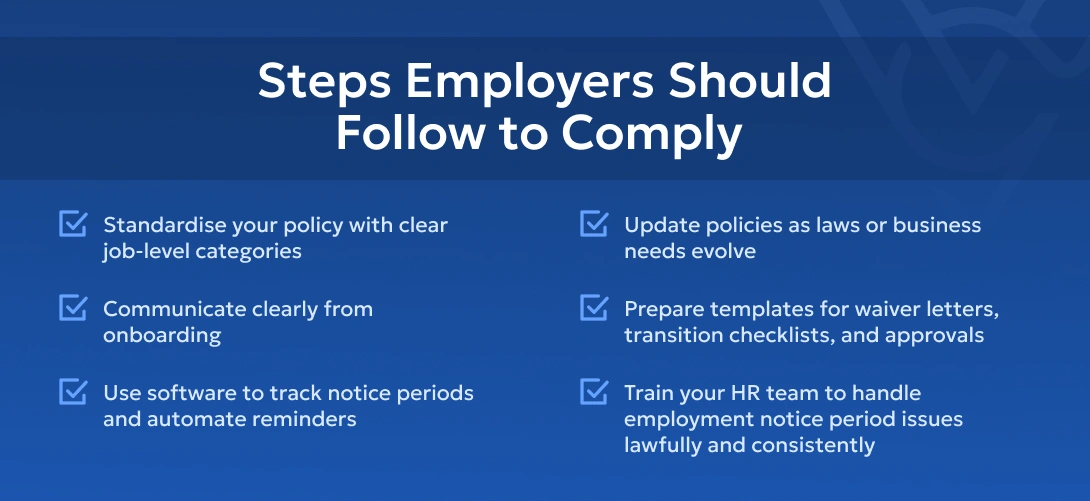
We get it, exits can feel chaotic at times. But with a clear policy and the right systems in place, managing them becomes much easier and far less stressful.
Steps Employers Should Follow to Comply
Handling a complicated employee exit or notice-period situation? Get professional labour-law support.
Managing notice period rules in India can feel like walking a tightrope. One small misstep, like a missed timeline or unclear policy, can lead to legal issues or broken trust. The law tries to offer protection, but let’s be honest, it can be confusing. No wonder many businesses find this part tricky.
But the good news? You don’t have to figure it out alone. Vishaal Consultancy Services supports you with expert labour law advisory and complete statutory compliance solutions. We guide you with policies that work, without the legal stress. Let’s make compliance feel less like a task and more like peace of mind.
See Related Blogs
BLOGS
Fill in your details to download our New Labour Code PDF.
Fill in your details to download our exclusive e-learning document.
Fill in your details to download our exclusive e-learning document.
Fill in your details to download our exclusive e-learning document.